PUBLICATIONS 2024 to 2026
From inland vigour to coastal caution: contrasting germination strategies of a tropical hydrochoric bromeliad
Distinct environmental factors can drive divergent selection, shaping contrasting ecological strategies across populations. Coastal habitats characterized by extreme abiotic conditions, such as high salinity [...]
Corresponding author:
Rafael Vasconcelos Ribeiro
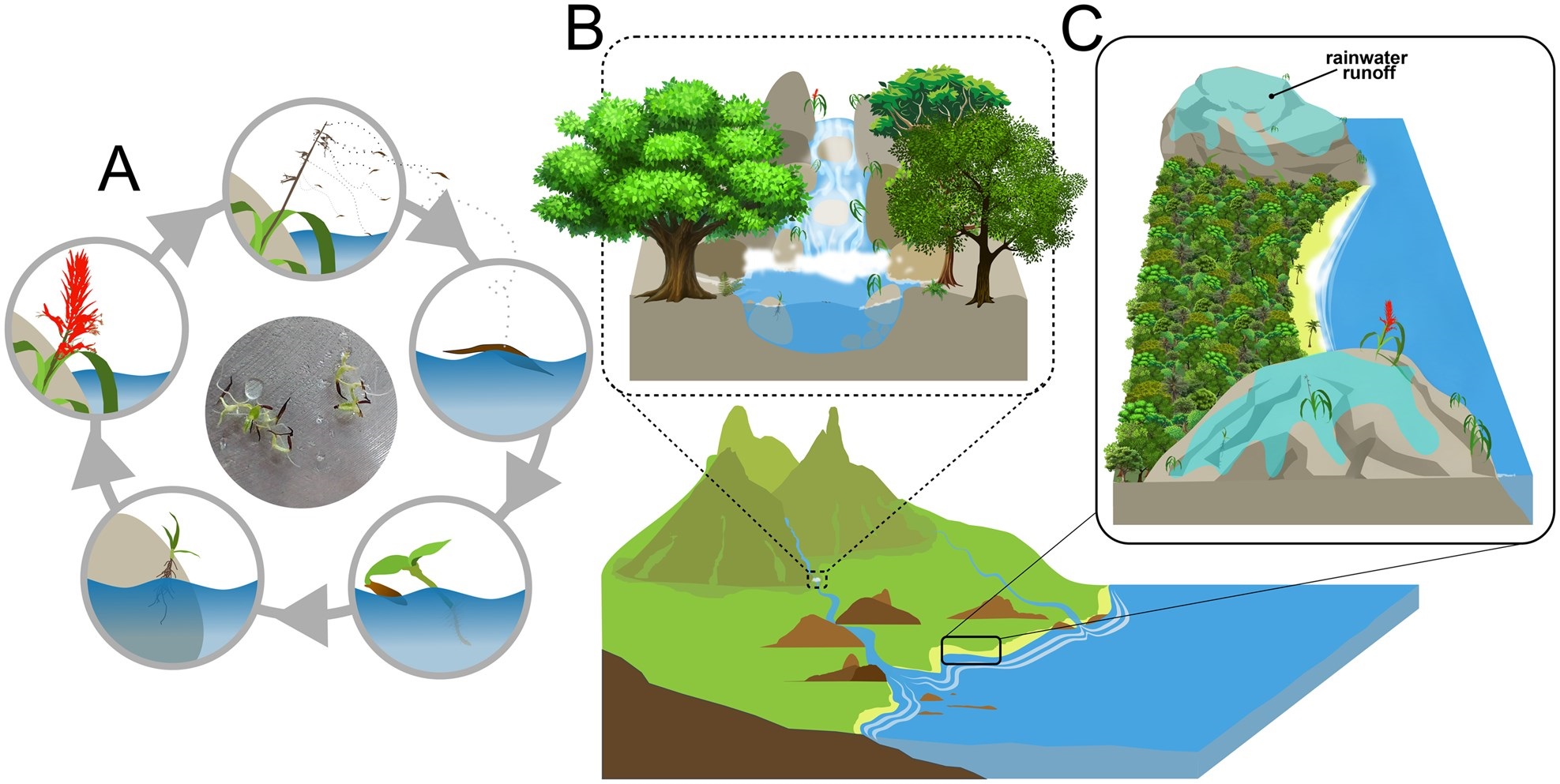
From inland vigour to coastal caution: contrasting germination strategies of a tropical hydrochoric bromeliad
Distinct environmental factors can drive divergent selection, shaping contrasting ecological strategies across populations. Coastal habitats characterized by extreme abiotic conditions, such as high salinity and low water availability, impose intense selective pressures on plants. By contrast, inland tropical environments with species-rich communities, due to abundant freshwater availability, favour traits associated with rapid seedling establishment. Here, we investigate the germination and seedling performance of Pitcairnia flammea, an endemic tropical bromeliad with a potential hydrochoric dispersal, across coastal and inland populations. Our results reveal that inland populations exhibit rapid and consistent germination across water availability gradients, reflecting a potential competitive strategy in freshwater-rich riparian environments. Conversely, coastal populations display delayed germination and reduced success under drought and saline conditions, suggesting an avoidance strategy to mitigate abiotic stress. Floating seeds demonstrated enhanced germinability and reduced mortality, highlighting hydrochory as a central dispersal strategy under both freshwater and saline conditions. These findings offer novel insights into the adaptive significance of germination strategies in bromeliads, highlighting the dual roles of abiotic filters in shaping coastal populations and competitive strategies in inland populations. Our study highlights the effect of both abiotic and biotic pressures on shaping the divergent selection of tropical populations distributed across environmental gradients.
Cleber J. N. Chaves , Isabella V. Lemos-Silva , Danilo U. Tavares , Paulo Aecyo , Henrique M Vilela-Bianchini , Camila C. de Carvalho , Rafael V. Ribeiro , Diego Escobar-Escobar , Clarisse Palma-Silva
Nitrogen is the most limiting macronutrient for growth, photochemical performance and stomatal conductance in Agave spp
Macronutrient availability is a major constraint for Agave cultivation in semi-arid regions, yet its effects on growth, nutrient balance, and physiological performance remain poorly understood. In a 317-day [...]
Corresponding author:
Matheus D. Laira
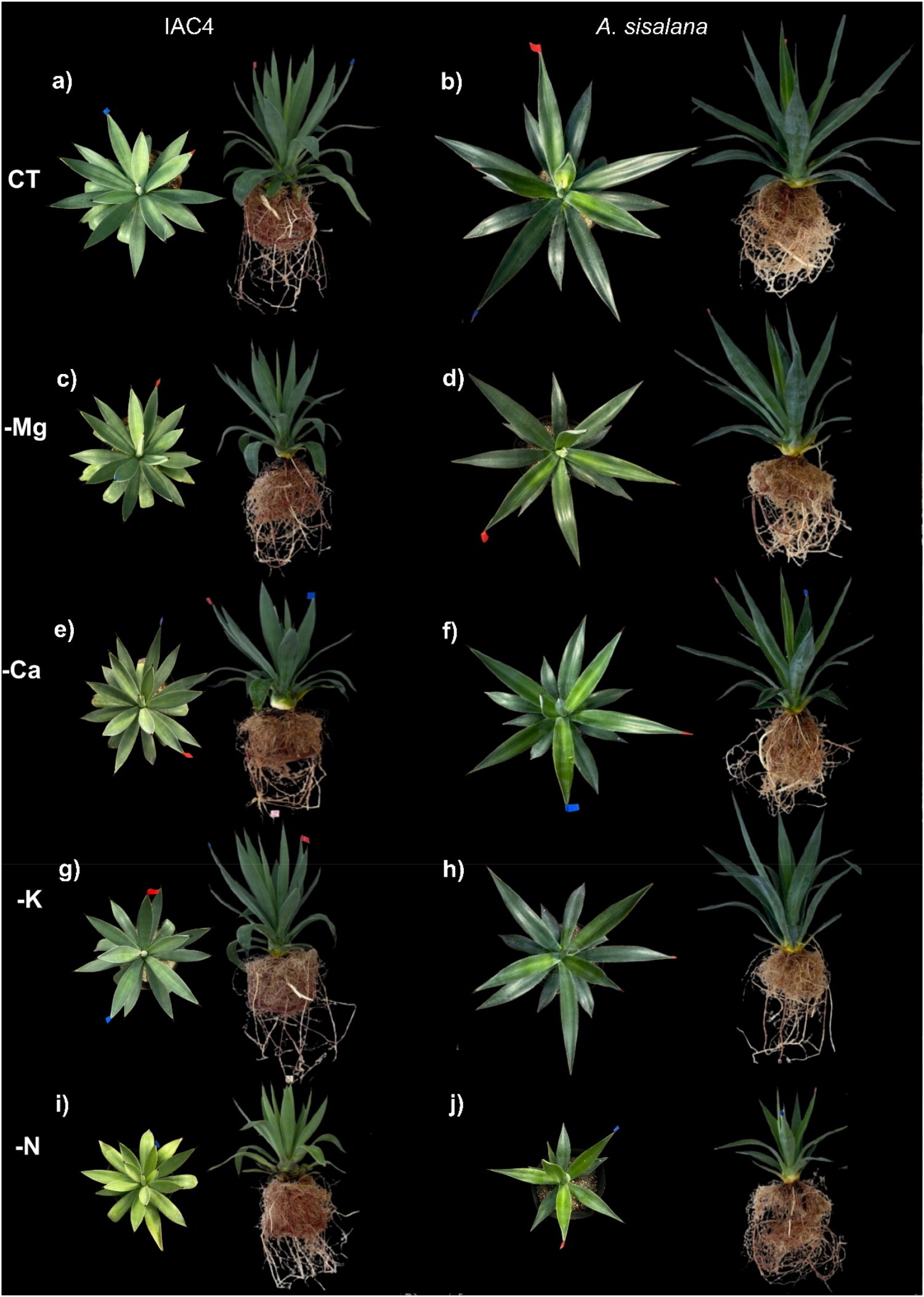
Nitrogen is the most limiting macronutrient for growth, photochemical performance and stomatal conductance in Agave spp
Macronutrient availability is a major constraint for Agave cultivation in semi-arid regions, yet its effects on growth, nutrient balance, and physiological performance remain poorly understood. In a 317-day greenhouse pot experiment, this study evaluated the effects of nitrogen (-N), potassium (-K), calcium (-Ca), and magnesium (-Mg) omission on biomass production, nutrient accumulation, nutrient use efficiency, photochemical performance, and stomatal conductance in Agave sp. IAC4 and A. sisalana. Macronutrient omission impaired growth and nutrient homeostasis in both genotypes, with -N causing the strongest effects and reducing total biomass by up to 56%, particularly in A. sisalana. Nutrient limitation also altered stomatal conductance and photochemical performance, with maximum electron transport rate decreasing by up to 51% under -N. A. sisalana was more sensitive to nutrient limitation than IAC4, showing greater reductions in biomass, nutrient accumulation, and physiological performance. Overall, N was the most limiting macronutrient among those evaluated, followed by K and Ca, whereas Mg had comparatively smaller effects. These findings demonstrate that macronutrient availability strongly influences the coordination of growth, nutrient homeostasis, and physiology in Agave, while revealing substantial genotype-dependent responses under nutritional limiting conditions.
Matheus D. Laira, Tamires S. Martins, Larissa P. Cruz, Heitor L. Sartori, Wagner J. V. dos Reis, Sávio J. Silva, Fábio T. Raya, Camila C. Carvalho, Gonçalo A. G. Pereira & Rafael V. Ribeiro
Foliar delivery and biological responses of lignin nanoparticle formulations encapsulating indole-3-acetic acid in cherry tomato plants
Nanotechnology offers innovative approaches to improving the efficiency of agrochemicals through targeted delivery systems. Among polymeric nanocarriers, lignin nanoparticles (Ln) represent a biodegradable [...]
Corresponding author:
Rafael Vasconcelos Ribeiro
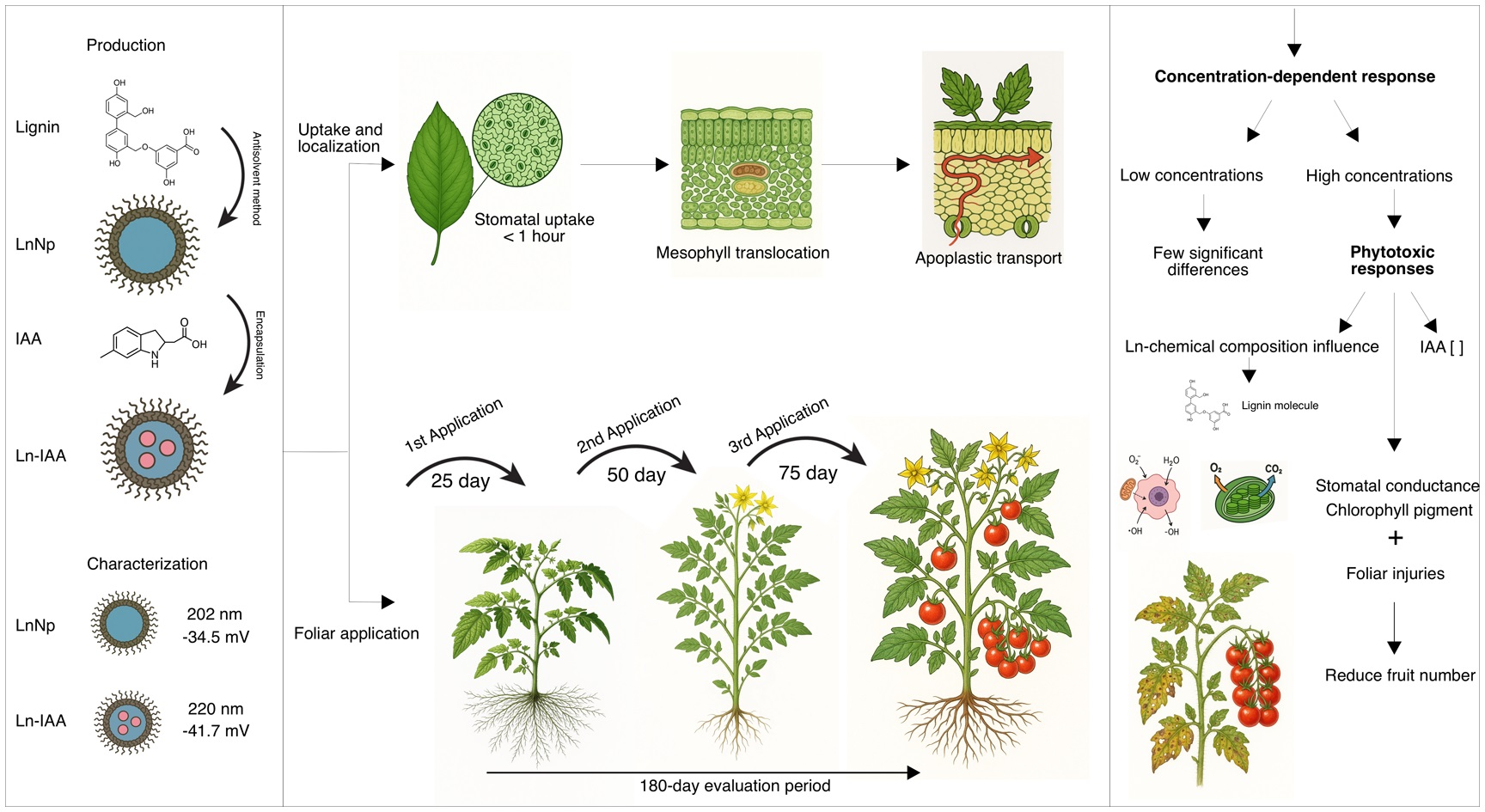
Foliar delivery and biological responses of lignin nanoparticle formulations encapsulating indole-3-acetic acid in cherry tomato plants
Nanotechnology offers innovative approaches to improving the efficiency of agrochemicals through targeted delivery systems. Among polymeric nanocarriers, lignin nanoparticles (Ln) represent a biodegradable and biocompatible platform for the delivery of plant growth regulators (PGRs). Recent advances in the encapsulation of phytohormones using polymeric nanoparticles have increased interest in their agricultural applications. However, most studies have focused on seed treatments, whereas foliar applications remain comparatively unexplored. In this context, we evaluated the foliar localization, physiological responses, and agronomic performance of Ln and Ln-IAA formulations in cherry tomato plants cultivated under greenhouse conditions throughout the complete growth cycle. Lignin nanoparticles measuring 220–230 nm and exhibiting encapsulation efficiency above 90% were synthesized by solvent displacement and characterized by dynamic light scattering and zeta potential analyses. The Ln and Ln-IAA formulations, both containing carvacrol, together with free IAA (0.05, 5, 50, and 100 μg mL−1), were applied through three foliar sprays, and plants were evaluated using anatomical, physiological, and photosynthetic pigment analyses, including confocal imaging of fluorescently labeled lignin nanoparticles, chlorophyll quantification, gas-exchange measurements, and fruit traits. Confocal microscopy showed rapid detection of nanoparticle-associated fluorescence following foliar application. Fluorescence was detected in the stomatal region and mesophyll within one hour after application. Although the Ln-IAA formulations generally elicited weaker biological responses than free IAA, the Ln formulation (50 μg mL−1) and the Ln-IAA formulations (50 and 100 μg mL−1) were associated with foliar injury, reduced physiological performance, and lower fruit number, whereas the lower-concentration Ln-IAA formulations produced comparatively limited effects. Overall, fluorescently labeled lignin nanoparticles were detected in leaf tissues following foliar application, with fluorescence patterns consistent with entry through stomatal openings, whereas the biological responses of the evaluated formulations depended on treatment concentration and formulation characteristics. These findings highlight the importance of optimizing nanoparticle formulations and application strategies for safe and effective agricultural use.
Rodrigo Faleiro, Magda A. Tessmer; Anderson do e. S. Pereira, Marcela T. Miranda, Leonardo F. Fraceto, Rafael V. Ribeiro & Juliana L. S. Mayer
Xylem sap residue in cut-open conduits can affect gas discharge in pneumatic experiments
Considerable attention has been paid to addressing methodological concerns related to measurements of embolism in conduits of angiosperm xylem. A fast, easy and cheap method is based on gas extraction [...]
Corresponding author:
Marcela Trevenzoli Miranda
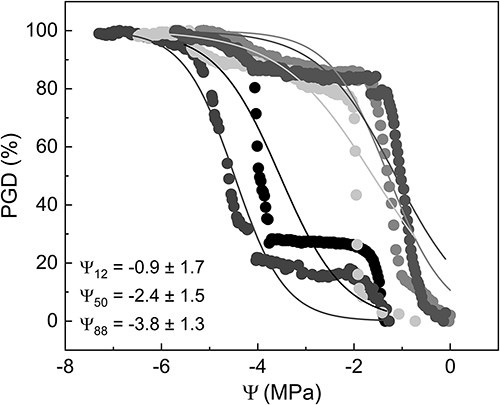
Xylem sap residue in cut-open conduits can affect gas discharge in pneumatic experiments
Considerable attention has been paid to addressing methodological concerns related to measurements of embolism in conduits of angiosperm xylem. A fast, easy and cheap method is based on gas extraction measurements from dehydrating samples to obtain pneumatic vulnerability curves (VCs). Here, we tested the assumption that cutting open conduits leads to gas-filled lumina when these are cut in air at fairly high water potentials, which is required to detect embolism in intact conduits. We performed VCs with the Pneumatron for 12 angiosperm species and extracted sap from cut-open vessels in branches of nine species under early stages of branch dehydration. The optical method was applied to Citrus plants as an alternative reference method to estimate embolism resistance. We found an increase in gas discharge during early stages of dehydration, which affected the pneumatic VCs for most of the species studied. Xylem sap residue was not absorbed immediately by surrounding tissue in cut-open conduits in six of the nine species but gradually disappeared over time during progressive dehydration. The amount of gas discharged increased until all residual sap was absorbed, and was not related to embolism. We conclude that residual xylem sap in cut-open conduits affects early stages of pneumatic VCs and represents a novel artifact that can easily be corrected for. Yet, it remains unclear why exactly the air–water meniscus in cut-open conduits did not fully withdraw to the conduit end wall in most species. By analyzing the slope of VCs over time, we could improve estimations of embolism resistance, as evidenced by a strong agreement between the pneumatic and the optical methods. Since residual sap in cut-open conduits of some species could slightly underestimate embolism resistance, we propose to apply a correction for this artifact based on the high time-resolution measurements taken with a Pneumatron.
Marcela T Miranda, Luciano Pereira, Gabriel S. Pires, Xinyi Guan, Luciano M. Silva, Swetlana Kreinert, Eduardo C. Machado, Steven Jansen & Rafael V Ribeiro
Young sugarcane plants exhibit higher photosynthetic tolerance to acute ozone exposure than energy cane
We evaluated the impact of acute ozone (O3) on photosynthesis of energy cane and sugarcane, hypothesizing that energy cane –known for its resilience to environmental disturbances– would exhibit higher [...]
Corresponding author:
Tamires da Silva Martins
Young sugarcane plants exhibit higher photosynthetic tolerance to acute ozone exposure than energy cane
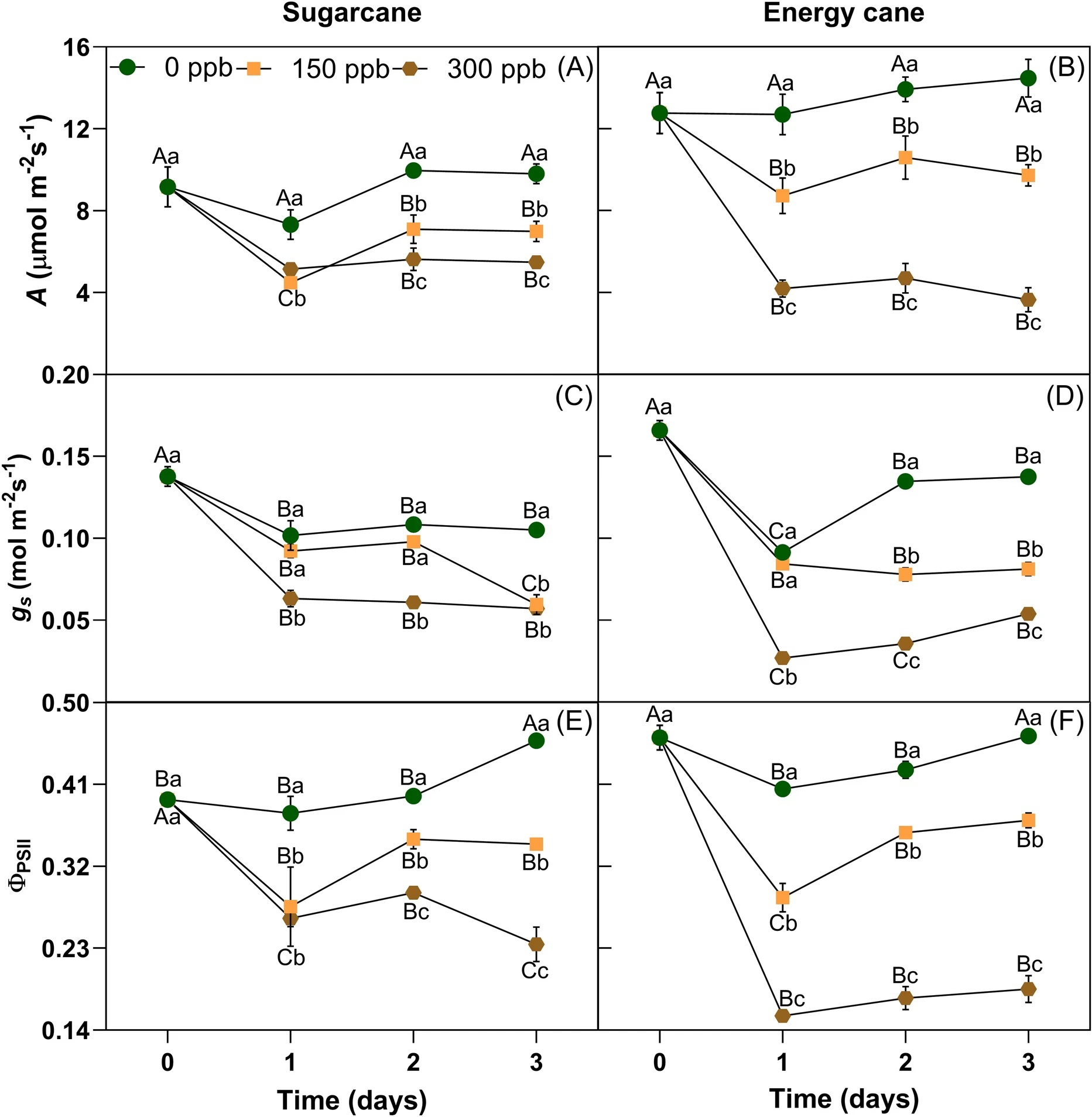
We evaluated the impact of acute ozone (O3) on photosynthesis of energy cane and sugarcane, hypothesizing that energy cane –known for its resilience to environmental disturbances– would exhibit higher tolerance to O3 than sugarcane. Under growth chamber conditions, plants were exposed to three O3 concentrations (0, 150, and 300 ppb) for three consecutive days. Leaf CO2 assimilation declined in both crops after one day of exposure at 150 and 300 ppb O3. While sugarcane maintained similar performance at both 150 and 300 ppb O3, energy cane showed the lowest photosynthetic rates at 300 ppb O3. Such higher sensitivity of energy cane was driven by reduced photochemical efficiency (ΦPSII) at 150 ppb O3 and by low stomatal conductance and ΦPSII at 300 ppb O3. Notably, sugarcane showed significant stomatal closure after three days of exposure to 150 ppb O3, preventing further O3 influx and maintaining CO2 assimilation. However, this protective mechanism was not effective under 300 ppb O3. PEPCase and Rubisco carboxylation rates decreased in both crops after three days under O3 exposure. The rates of decline in leaf CO2 assimilation due to increasing air O3 concentration were higher in sugarcane and in energy cane, i.e., 0.2 and 0.3 mmol m⁻2 s⁻1 per 10-ppb O3 increase, respectively. Contrary to our initial hypothesis, energy cane was more sensitive to acute O3 exposure. Sugarcane exhibited greater short-term photosynthetic tolerance to O3 linked to stomatal regulation and photochemical stability.
Tamires S. Martins, Matheus D. Laira, Gabriel S. Pires, Rafael L. Almeida, Dany Afif, Mireille Cabané, Anthony Gandin & Rafael V. Ribeiro

Um dia como cientistas: aproximando alunos do ensino médio à pesquisa e ao desenvolvimento em bioenergia
O ensino prático constitui uma estratégia essencial para promover o engajamento dos alunos, facilitar a compreensão de conceitos complexos e desenvolver competências científicas. A vivência do método [...]
Corresponding author:
Rafael Vasconcelos Ribeiro
Um dia como cientistas: aproximando alunos do ensino médio à pesquisa e ao desenvolvimento em bioenergia
O ensino prático constitui uma estratégia essencial para promover o engajamento dos alunos, facilitar a compreensão de conceitos complexos e desenvolver competências científicas. A vivência do método científico e a aprendizagem baseada em experiências concretas reforçam o interesse de jovens alunos pela pesquisa e pela ciência. Em áreas estratégicas como a bioenergia, temática central para a sustentabilidade e os Objetivos de Desenvolvimento Sustentável (ODS) da Organização das Nações Unidas, atividades práticas assumem papel crucial tanto na conscientização sobre fontes renováveis quanto na formação de cidadãos mais engajados. Durante o evento internacional BBEST & IEA Bioenergy Conference 2024, foram promovidas ações formativas e interativas, de caráter extensionistas, voltadas para alunos do Ensino Médio de escolas da cidade de São Paulo. As atividades incluíram palestras de especialistas sobre avanços e desafios do setor, sessões de pôsteres com exposição e debate de pesquisas, coffee breaks científicos que estimularam o networking acadêmico, além de experiências em realidade virtual para visualização dinâmica de conceitos técnicos. Ao final das atividades descritas foi disponibilizado um questionário para avaliação, sem a identificação dos participantes. A avaliação revelou elevado engajamento pela temática, satisfação dos participantes e evidenciou a eficácia de ações extensionistas para educação científica. Os resultados demonstram impacto positivo na aproximação entre teoria e prática, despertando nos alunos maior interesse e engajamento por iniciativas de pesquisa em sustentabilidade e reforçando a importância de integrar prática e reflexão na formação de cidadãos preparados para os desafios globais.
Carolina R. de Oliveira, Aline Vitória C. M. Corim & Rafael V. Ribeiro
Leaf phosphorus spraying causes a fast and partial recovery of photosynthesis and improves biomass production of Phaseolus vulgaris L. plants facing phosphorus deficiency
Phosphorus (P) deficiency severely limits common bean (Phaseolus vulgaris L.) yield, especially during reproductive stages. This study aimed to evaluate the effect of leaf P spraying on photosynthetic [...]
Corresponding author:
Matheus D. Laira
Leaf phosphorus spraying causes a fast and partial recovery of photosynthesis and improves biomass production of Phaseolus vulgaris L. plants facing phosphorus deficiency
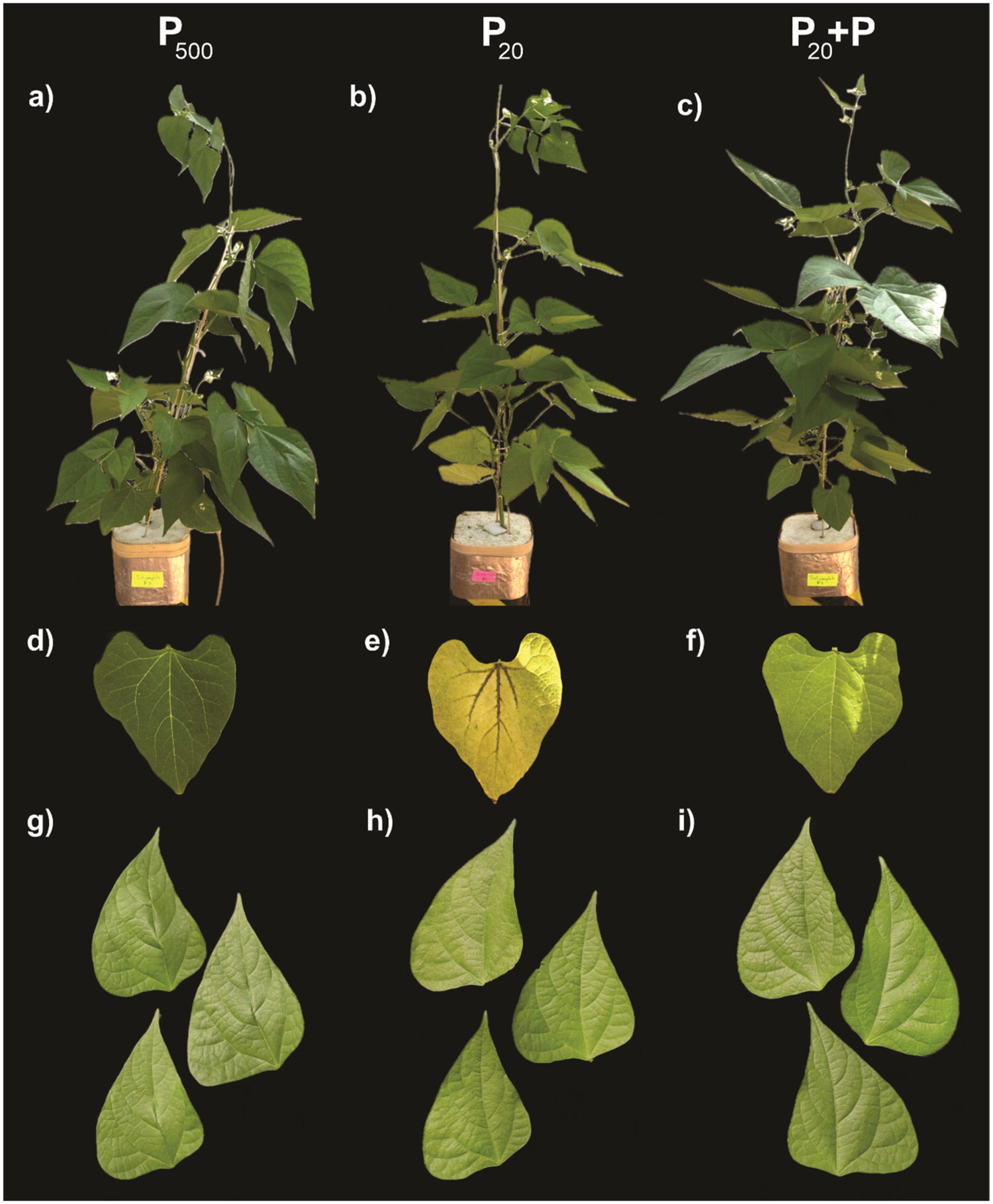
Phosphorus (P) deficiency severely limits common bean (Phaseolus vulgaris L.) yield, especially during reproductive stages. This study aimed to evaluate the effect of leaf P spraying on photosynthetic performance, nutritional status, and growth in common bean plants facing P deficiency at the reproductive phase. The experiment was conducted in a greenhouse using hydroponics with three treatments: P-sufficient plants (P500), P-deficient plants (P20), and P-deficient plants receiving leaf P spraying (P20+P). We assessed leaf P and nitrogen concentrations, photosynthetic pigments (chlorophyll a and b), photochemistry (maximum and effective quantum efficiency of PSII), and leaf gas exchange (net CO2 assimilation rate, stomatal conductance, transpiration, intercellular CO2 partial pressure, intrinsic water use efficiency) at 4, 8, and 12 days after spraying. Additionally, mesophyll conductance, dark respiration rate, maximum carboxylation rate of RuBisCO and the maximum electron transport rate were measured for assessing how P deficiency impaired photosynthesis. Biomass production and pod development were evaluated at pod formation. P deficiency significantly decreased leaf P and nitrogen contents, chlorophyll content, photochemical efficiency, stomatal and mesophyll conductance, and the overall photosynthetic capacity, resulting in impaired growth and reduced pod production by 52%. Leaf P spraying significantly reduced these losses, reducing the pod dry mass gap to 16%, restoring pod weight to P-sufficient levels, and boosting overall biomass by 18%. Leaf P spraying led to a rapid, yet partial restoration of nutrient concentrations and photosynthetic traits within 4–8 days, enhancing biomass accumulation and pod yield. These positive effects diminished by 12 days post-application.
Matheus D. Laira, Tamires S. Martins, Rafael L. Almeida & Rafael V. Ribeiro
Canalized to heat, plastic to cold: adaptive coordination of leaf and seed strategies in populations spanning an elevational gradient
In tropical mountains, surviving temperature extremes demands finely tuned strategies. We investigated how populations of the bromeliad Pitcairnia flammea across a 2200 m elevational gradient balance [...]
Corresponding author:
Rafael Vasconcelos Ribeiro
Canalized to heat, plastic to cold: adaptive coordination of leaf and seed strategies in populations spanning an elevational gradient
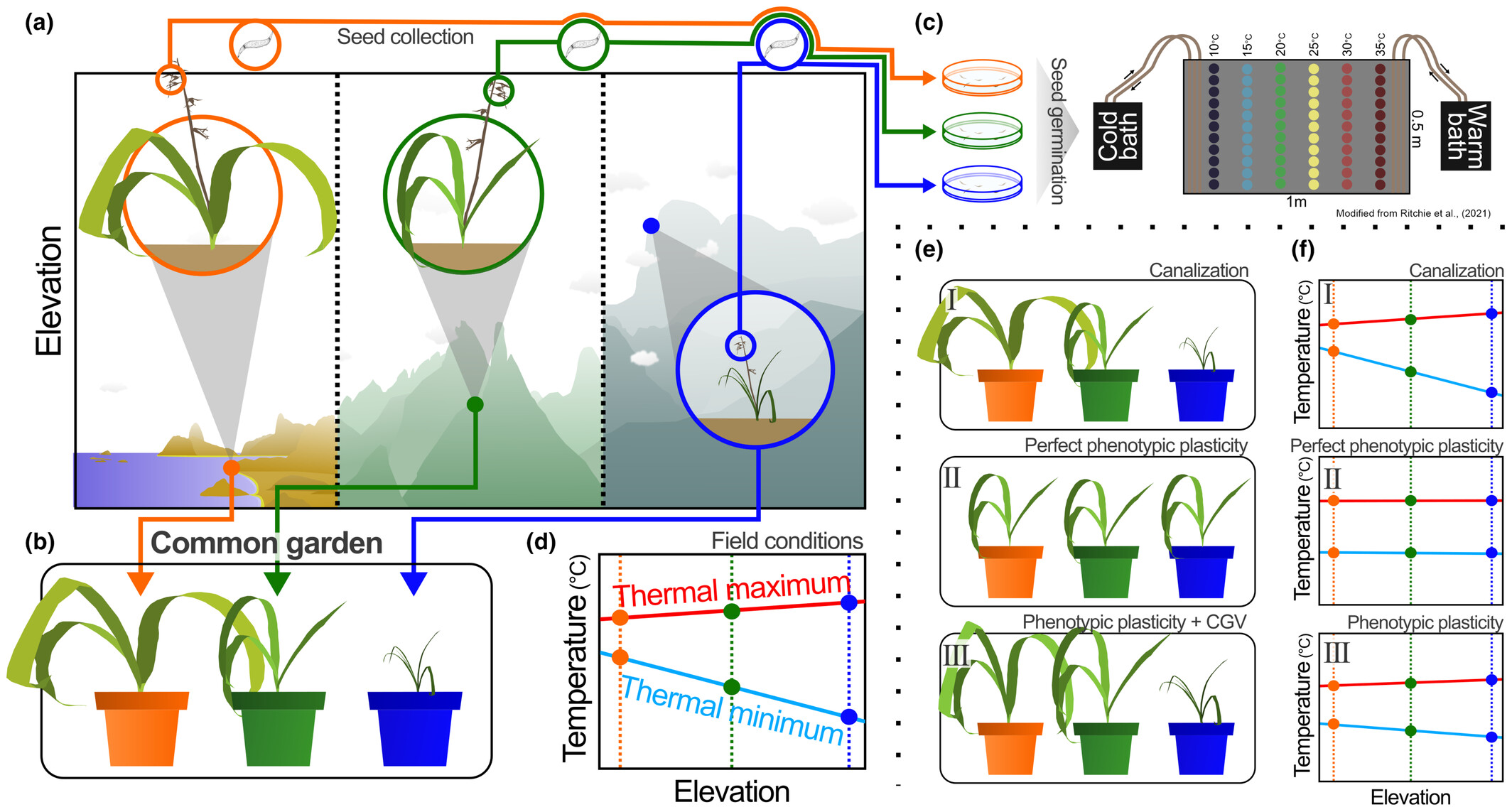
In tropical mountains, surviving temperature extremes demands finely tuned strategies. We investigated how populations of the bromeliad Pitcairnia flammea across a 2200 m elevational gradient balance genetic canalization and plasticity, and whether thermal strategies are coordinated between seeds and leaves. Seven populations (n ≥ 20 per site) were studied in the field and in a > 2-yr common-garden experiment. Leaf traits (mass per area, area, succulence, stomatal, and trichome densities) and thermal tolerance (T50 for heat and cold) were measured, and germination assays (10–35°C) quantified seed thermal performances. Multivariate analyses linked leaf and seed traits to elevation and local thermal conditions. Heat tolerance and leaf traits were maintained in the common garden, indicating strong canalization, whereas cold tolerance was highly plastic, decreasing by up to 17.9°C. Seeds from high elevations germinated faster, with higher cardinal temperatures and c. 230 fewer growing degree days than lowland seeds. Thermal niche differentiation in P. flammea arises from canalized heat resistance and plastic cold responses, coordinated across leaves and seeds. Considering thermal traits across life stages improves predictions of population resilience under climate warming.
Cleber J. N. Chaves, Danilo U. Tavares, Isabella V. Lemos-Silva, João P. S. P. Bento, Henrique Vilela-Bianchini, Paulo Aecyo, Tami C. Cacossi, Marília M. Tavares, Gabriel P. Sabino, Vitor de A. Kamimura, Wagner L. dos Santos, Lucas N. Gonçalves, Karina T. Silva, Juliana L. S. Mayer, Rafael V. Ribeiro, Diego Escobar-Escobar, Kenneth J. Feeley & Clarisse Palma-Silva
Damage to guava plants by multiple infections of Austropuccinia psidii
Myrtle rust, caused by Austropuccinia psidii, is the most severe fungal disease in guava. This polycyclic disease can cause polyetic (i.e., cumulative) damage in perennial plants, reducing plant growth [...]
Corresponding author:
Rafael Vasconcelos Ribeiro
Damage to guava plants by multiple infections of Austropuccinia psidii
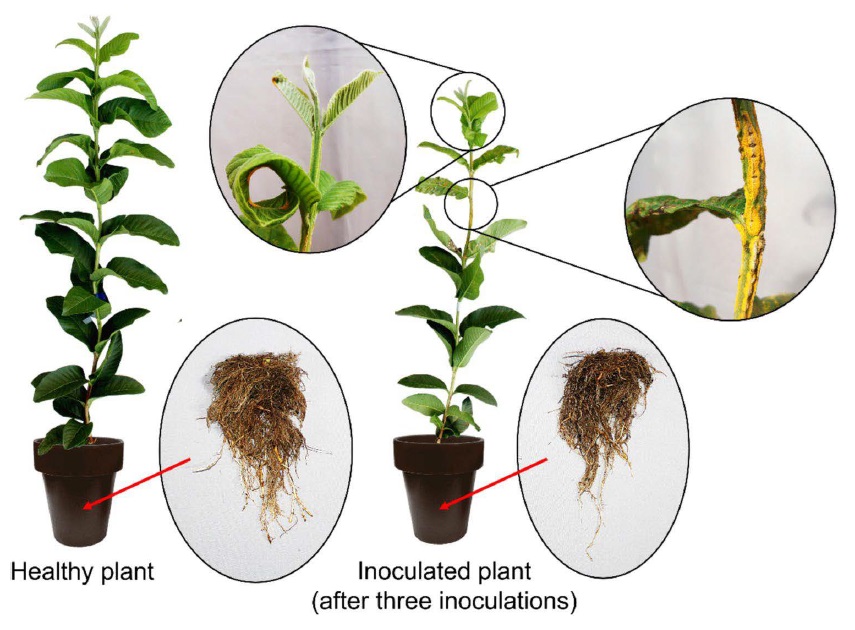
Myrtle rust, caused by Austropuccinia psidii, is the most severe fungal disease in guava. This polycyclic disease can cause polyetic (i.e., cumulative) damage in perennial plants, reducing plant growth and yield in successive crop seasons. Since the evaluation of polyetic damage in the field requires many years, a possible alternative to estimate it would be through multiple inoculations of the pathogen in a controlled environment. The objective of this study was to estimate the impact of successive inoculations of A. psidii on damage of guava plants. Young shoots of guava plants were inoculated three times with A. psidii with intervals of 14 days between inoculations. Disease severity and vegetative growth of host plants were evaluated throughout the experiment. Leaf gas exchange, Rubisco activity, carbon mass isotopic signature and concentrations of ascorbate and glutathione were evaluated 14 days after each inoculation. High disease severity, defoliation and shoot dieback were observed in inoculated plants by the end of the experiment. Net CO2 assimilation, stomatal conductance and transpiration showed average reductions of 47%, 31% and 19% respectively in inoculated plants, compared to healthy plants. Rubisco activity and carbon mass isotopic signature decreased in inoculated plants, especially after the third inoculation. Myrtle rust induced oxidative stress as indicated by the increased concentration of oxidized glutathione. The reductions in dry mass of leaves, stems and roots in inoculated plants ranged from 30% to 62%. Our controlled experiments, representing the rust polycycle in a single growing season of guava plants, revealed the mechanisms behind the damage caused by this disease. The reductions in photosynthesis and vegetative growth caused by the repeated inoculations of A. psidii indicate that rust can cause severe damage to guava trees, and serves as a validated proxy for predicting long-term polyetic damage.
Ana Laura Toledo Simões, Manoel P. Gonçalves, Rafael V. Ribeiro, Anthony Gandin, Dany Afif, Audrey Berthe, Silvia de A. Lourenço & Lilian Amorim
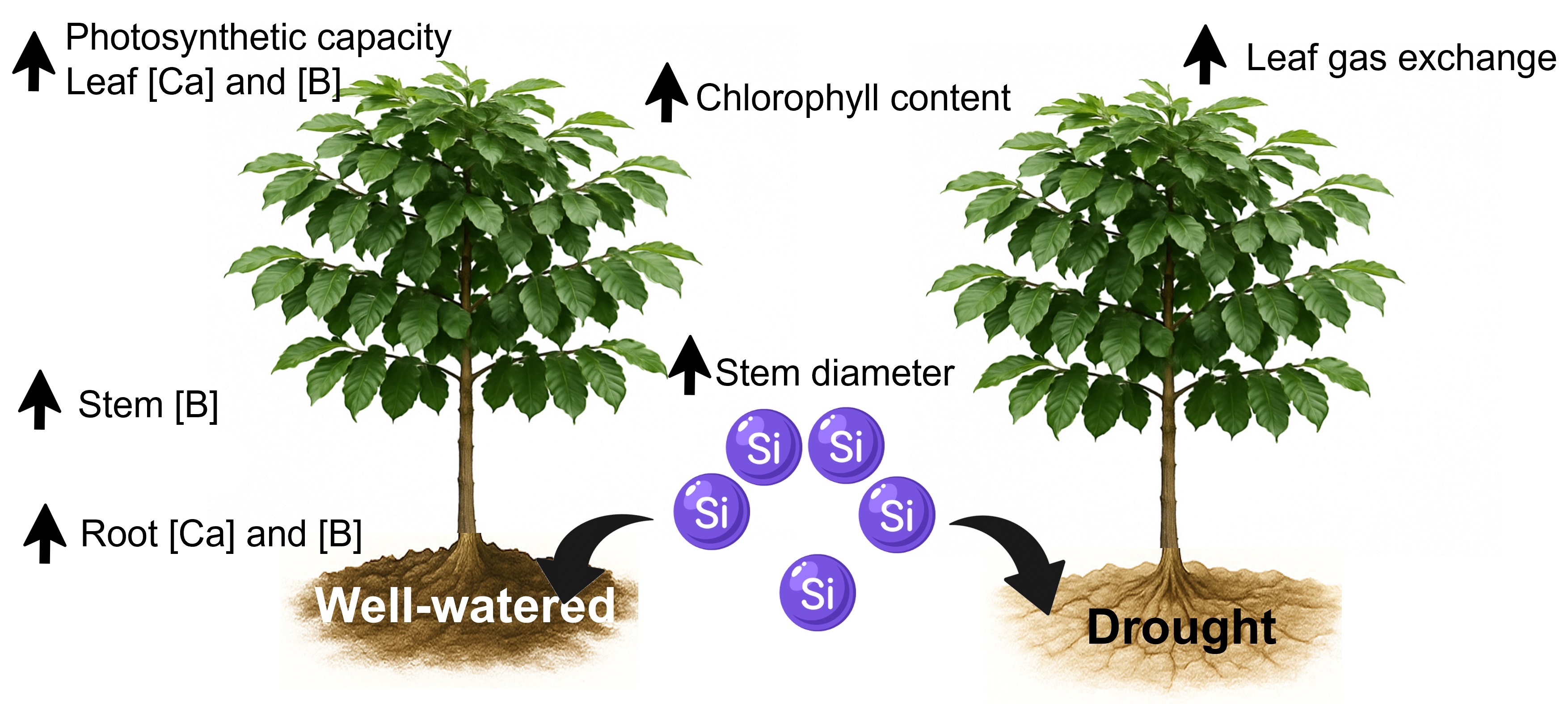
Soil Ca2SiO4 Supplying Increases Drought Tolerance of Young Arabica Coffee Plants Soil
Silicon (Si) may benefit the growth and physiology of various cultivated species, especially under stress conditions. Here, we hypothesized that soil Si supplying as Ca2SiO4 would increase the drought [...]
Corresponding author:
Miroslava Rakocevic
Soil Ca2SiO4 Supplying Increases Drought Tolerance of Young Arabica Coffee Plants Soil
Silicon (Si) may benefit the growth and physiology of various cultivated species, especially under stress conditions. Here, we hypothesized that soil Si supplying as Ca2SiO4 would increase the drought tolerance and water use efficiency of young Coffea arabica L. (Arabica coffee) plants, by maintaining shoot water status and photosynthesis under low water availability. To test such a hypothesis, morphological and physiological (leaf water potential, leaf gas exchange, photochemical activity, chlorophyll content) traits of coffee plants were evaluated under varying soil Ca2SiO4 applications (0, 3000, 6000 kg ha−1) and water availability. The chemical composition of plant tissues was evaluated under well-watered conditions after six months of Ca2SiO4 application, with fertilized plants showing higher concentrations of Ca (leaves and roots) and B (all plant organs) as compared to plants not supplied with Ca2SiO4 (control treatment). As there were no changes in Si concentration in plant organs under Ca2SiO4 application, our data indicate that the coffee species is a Si non-accumulator, or at least the cultivar ‘Catuaí Vermelho’ evaluated herein. Additionally, the photosynthetic capacity of coffee plants increased with 6000 kg Ca2SiO4 ha−1 compared to the control under well-watered conditions, as given by increases in gross and net photosynthesis under light saturation, light saturation point, maximum RuBisCO carboxylation rate, maximum electron transport-dependent RuBP regeneration, and maximum rate of triose phosphate use. Such photosynthetic improvements underlined high leaf CO2 assimilation, transpiration, carboxylation efficiency, and chlorophyll content in plants grown under Si supplying and well-watered conditions. The negative impact of water deficit on leaf gas exchange was alleviated by Ca2SiO4 application, but the instantaneous water use efficiency was maintained as similar in both water regimes, as expected for Si non-accumulator species. Morphologically, coffee stem diameter was increased under Ca2SiO4 application, regardless of water regime. In conclusion, our data revealed that high Ca2SiO4 doses benefit coffee performance and also suggest that the use of steel slag—an industrial by product rich in Ca2SiO4—can be considered as a sustainable practice for residue recycling in agriculture while improving C. arabica growth and physiology under varying water availability.
Miroslava Rakocevic & Rafael V. Ribeiro
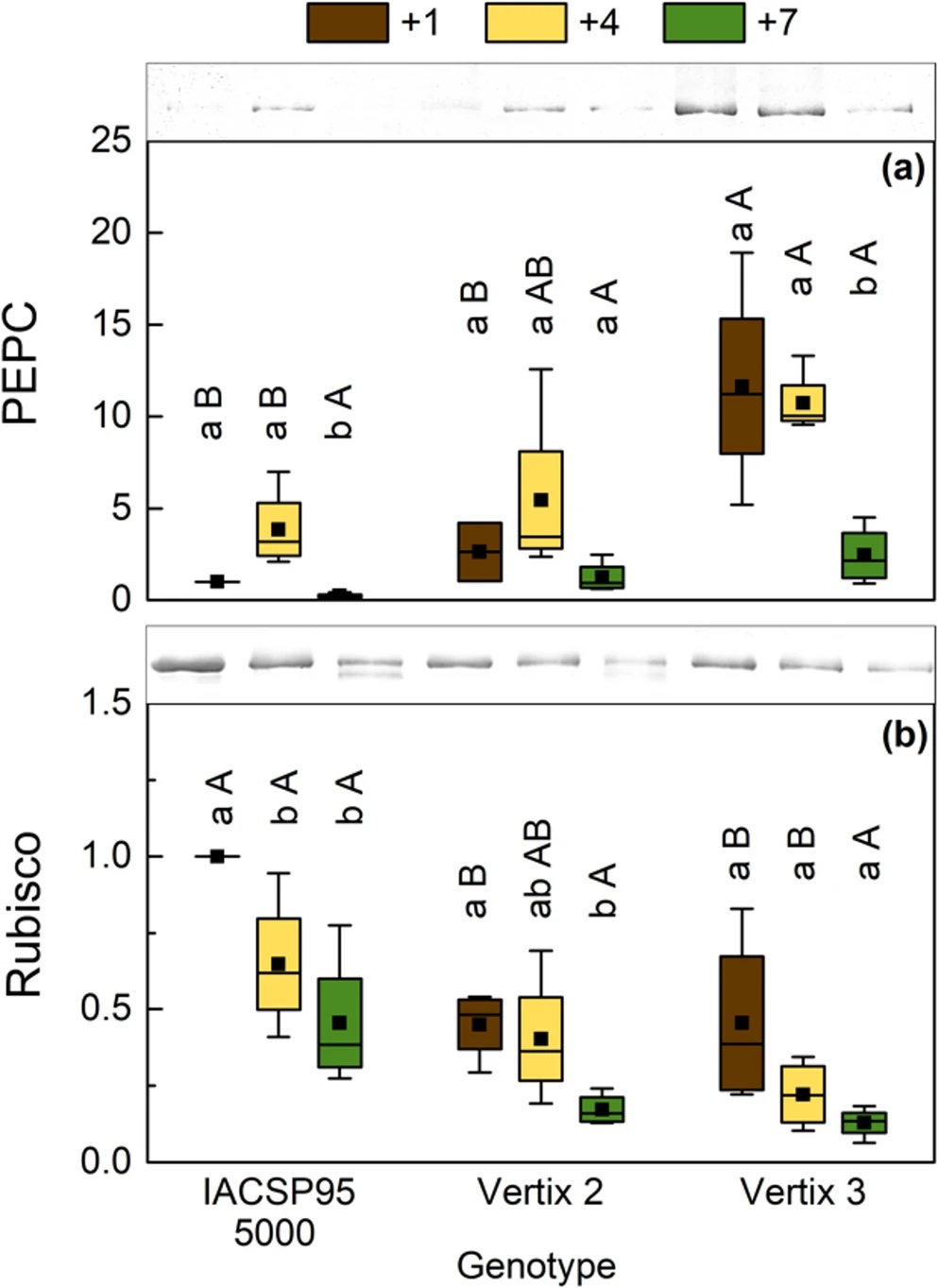
Canopy-Level Photosynthetic Homogeneity Accounts for Greater Biomass in Energy Cane Compared to Sugarcane
Energy cane (Saccharum spp. hybrid) is a sustainable feedstock for the sucroenergetic sector due to its capacity of producing more biomass than sugarcane (Saccharum spp. hybrid). As biomass is formed [...]
Corresponding author:
Larissa Prado Cruz
Canopy-Level Photosynthetic Homogeneity Accounts for Greater Biomass in Energy Cane Compared to Sugarcane
Energy cane (Saccharum spp. hybrid) is a sustainable feedstock for the sucroenergetic sector due to its capacity of producing more biomass than sugarcane (Saccharum spp. hybrid). As biomass is formed by carbohydrates, photosynthesis is a key physiological process to understand the biomass production by plants. Herein, one sugarcane (IACSP95-5000) and two energy canes (Vertix 2 and Vertix 3) genotypes were cultivated under greenhouse conditions to evaluate the photosynthetic capacity of top leaves and to measure the actual photosynthesis of all green leaves of the main tiller. Such evaluation consisted of measurements of leaf CO₂ assimilation rate, maximum and effective quantum efficiencies of photosystem II, chlorophyll fluorescence quenchings and the relative abundance of PEPC and Rubisco, as well as leaf chlorophyll and nitrogen contents. All genotypes showed similar maximum and actual photosynthesis in the top leaves, which was not correlated to their biomass production. In fact, the effects of leaf aging on canopy CO2 uptake and the differential tillering seem to explain biomass production. IACSP95-5000 showed a sharp decrease in several photosynthetic traits and in abundance of key photosynthetic enzymes along the canopy profile, resulting in the lowest biomass yield. Vertix 2 and Vertix 3 exhibited a canopy with higher photochemical activity and lower variation in abundance of key photosynthetic enzymes with leaf aging, as well as more well-developed tillers as compared with IACSP95-5000. Moreover, Vertix 2 – bred for high fiber content – exhibited a more homogeneous photosynthesis with leaf aging, a physiological trait associated with the highest biomass production among genotypes evaluated. Our findings indicate that visible signs of leaf aging – or its absence – do not necessarily correspond to a decline – or maintenance – of photosynthetic activity, which highlights the relevance for physiological parameters to guide agronomic and breeding strategies to improving biomass yield.
Larissa P. Cruz, Maria D. Pissolato, Rafael L. Almeida, Eduardo C. Machado & Rafael V. Ribeiro
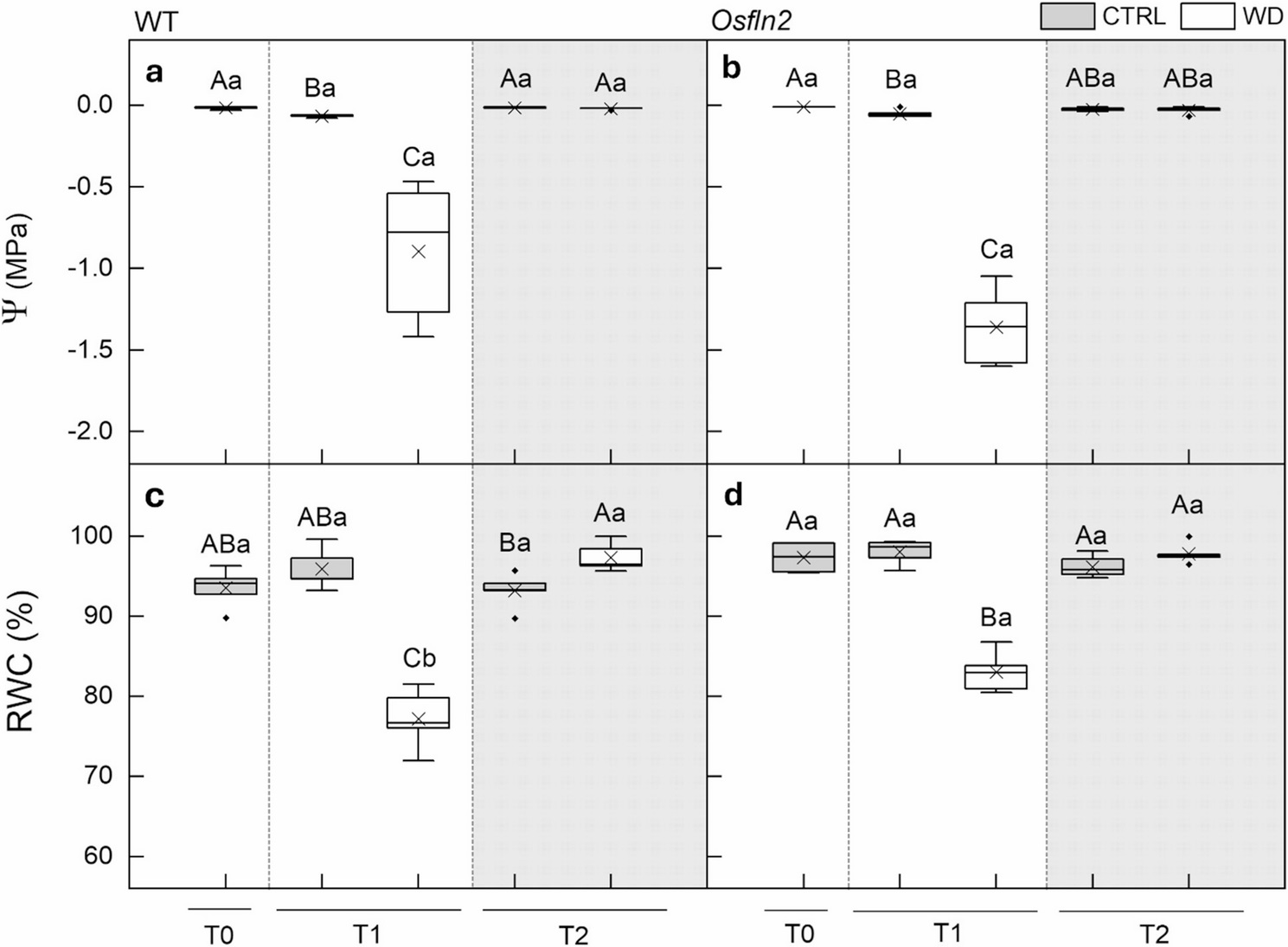
OsFLN2 gene knockout reduces leaf water status and photosynthetic performance of rice plants under water deficit
Abiotic stresses significantly impact plant growth and productivity. To overcome these challenges, plants employ photosynthetic acclimation mechanisms, enabling them to sustain photosynthetic efficiency [...]
Corresponding author:
Rafael Vasconcelos Ribeiro
OsFLN2 gene knockout reduces leaf water status and photosynthetic performance of rice plants under water deficit
Abiotic stresses significantly impact plant growth and productivity. To overcome these challenges, plants employ photosynthetic acclimation mechanisms, enabling them to sustain photosynthetic efficiency under adverse conditions. The OsFLN2 gene has been identified as a key player in chloroplast development and response to heat and salinity stress. However, the physiological effects of OsFLN2 gene knockout and its impact on drought tolerance remain elusive. In this study, we explored the function of OsFLN2 in rice plants under water deficit conditions using a non-transgenic CRISPR knockout mutant. Our findings demonstrate that Osfln2 mutant plants exhibit higher sensitivity to water deficit, characterized by reduced photosynthetic activity and reduced transcriptional responsiveness of plastid genes, such as RbcL and PsaA. As a result, these plants display compromised carboxylation efficiency and reduced leaf water use efficiency at the maximum water deficit. Concluding, our results demonstrate the role of OsFLN2 on physiological acclimation of rice plants under water-limiting conditions.
Danyel F. Contiliani, Simone F. da Silva, Rafael V. Ribeiro, Vitor N. Moraes, Laísa M. Rocha, Greice Lubini, Paula M. Nóbile, Tiago C. Pereira & Silvana Creste
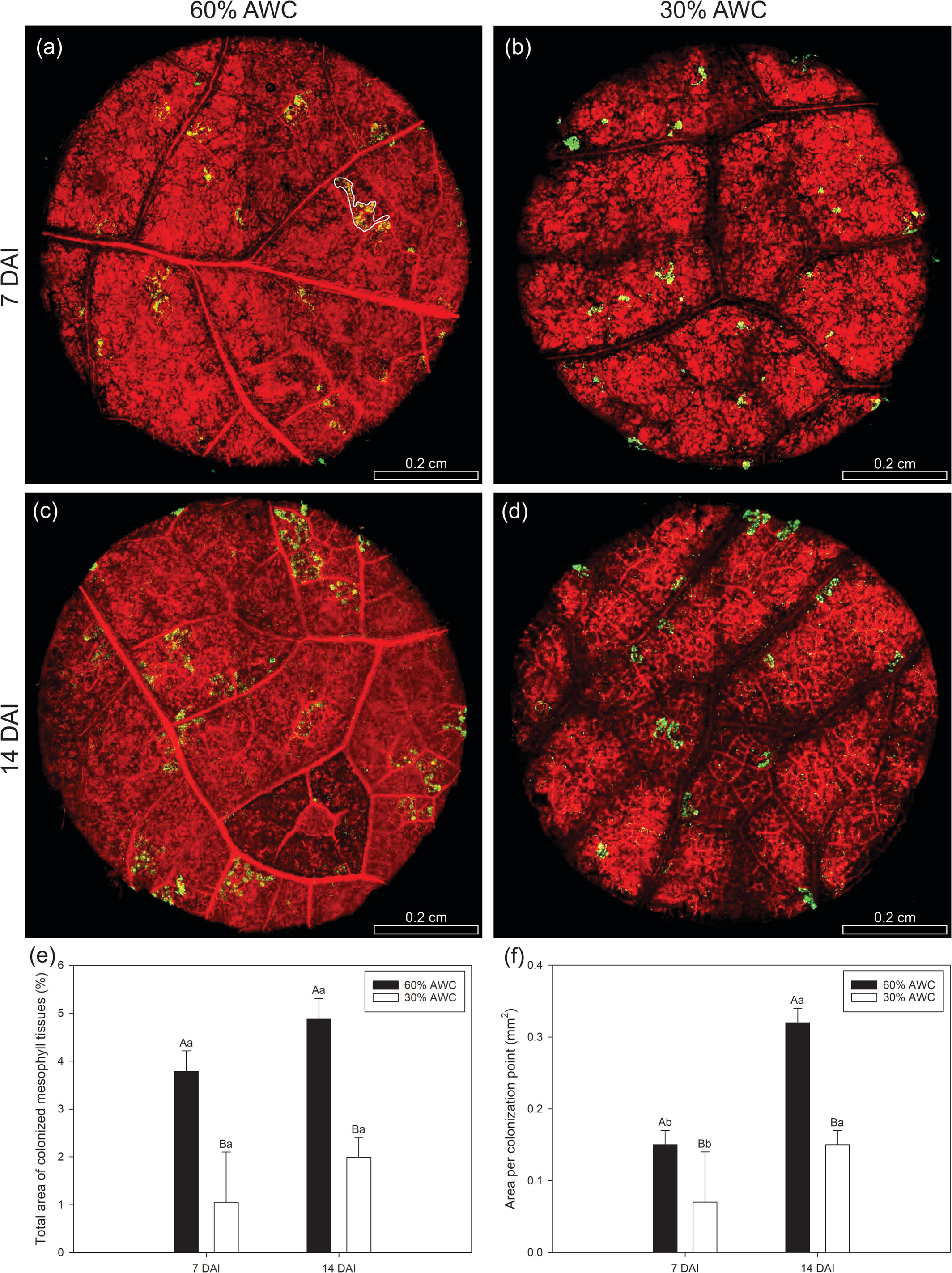
Late Leaf Rust Monocyclic Components and Primary Metabolism of Raspberry Plants Facing Water Deficit
Drought reduces host resistance and allows the emergence of pathogens that benefit from changes in plant physiology under water stress. However, for pathogens that penetrate only via the stomata, like [...]
Corresponding author:
Rafael Vasconcelos Ribeiro
Late Leaf Rust Monocyclic Components and Primary Metabolism of Raspberry Plants Facing Water Deficit
Drought reduces host resistance and allows the emergence of pathogens that benefit from changes in plant physiology under water stress. However, for pathogens that penetrate only via the stomata, like Aculeastrum americanum, stomatal closure due to water stress can prevent infection. Here, we test the hypothesis that raspberry (Rubus idaeus) late leaf rust severity is intensified when water deficit is imposed after penetration of A. americanum in leaves. We perform epidemiological and quantitative analyses of A. americanum colonisation, as well as measurements of leaf gas exchange, on healthy and inoculated leaves of R. idaeus ‘Heritage’. Plants were either grown under well-watered conditions throughout the experimental period (control) or submitted to water withholding 2 days after inoculation (water deficit). Our results revealed that the incubation and latent periods, urediniospore production and lesion density did not differ between the two water regimes. However, water deficit significantly reduced rust severity, A. americanum colonisation and leaf gas exchange in both healthy and inoculated plants. Comparing the biotic and abiotic stresses, late leaf rust has a greater impact on leaf CO2 assimilation than water deficit. In addition, there was a synergism between leaf rust and water deficit, causing further decreases in leaf gas exchange of raspberry plants. Based on these findings, we conclude that the occurrence of water deficit after the onset of pathogen infection reduces rust severity by limiting its colonisation capacity, a consequence of low photoassimilate supply to the pathogen due to impaired photosynthetic activity.
Lucas Henrique Santos Barbosa, Lilian Amorim, Rafael Vasconcelos Ribeiro, Ulla Neumann, Ton Timmers, Tonni Grube Andersen, Marcel Bellato Spósito & Beatriz Appezzato-da-Glória
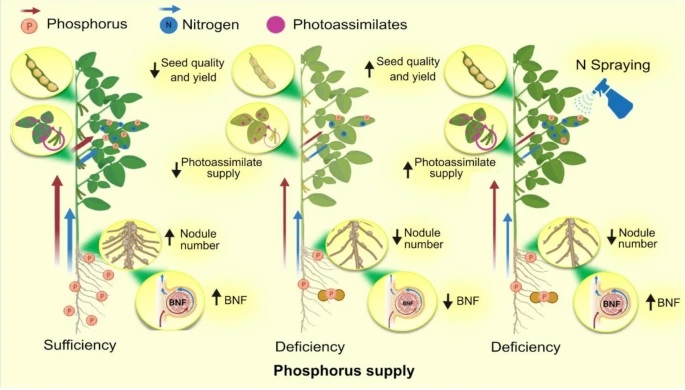
Leaf Nitrogen Spraying Improves Photosynthesis, Seed Quality and Yield of Soybean Plants Facing post-flowering Phosphorus Deficiency
Phosphorus (P) deficiency during the post-flowering phase limits soybean productivity in tropical soils by impairing biological nitrogen fixation (BNF), photosynthesis, and the allocation of photoassimilates [...]
Corresponding author:
Matheus D. Laira
Leaf Nitrogen Spraying Improves Photosynthesis, Seed Quality and Yield of Soybean Plants Facing post-flowering Phosphorus Deficiency
Phosphorus (P) deficiency during the post-flowering phase limits soybean productivity in tropical soils by impairing biological nitrogen fixation (BNF), photosynthesis, and the allocation of photoassimilates to reproductive structures. This study aimed to determine whether leaf nitrogen (N) spraying could enhance physiological performance and seed yield of soybean plants experiencing P deficiency during the reproductive development.
Matheus D. Laira, Tamires S. Martins, Rafael L. Almeida, Venancio F. de Moraes-Neto, Juliana A. L. Pallone, Fernando C. B. Zambrosi & Rafael V. Ribeiro
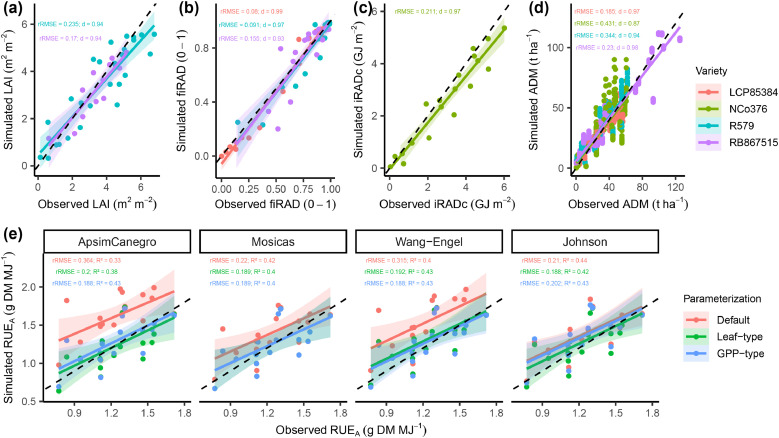
Sugarcane radiation use efficiency: varietal differences, temperature dependence, and implications for modeling biomass across environments
Sugarcane is a major tropical C4 crop of global economic significance, primarily used for sugar, ethanol, and bioenergy production. As climate change accelerates, with projected increases in global temperatures, [...]
Corresponding author:
Rafael Vasconcelos Ribeiro
Sugarcane radiation use efficiency: varietal differences, temperature dependence, and implications for modeling biomass across environments
Sugarcane is a major tropical C4 crop of global economic significance, primarily used for sugar, ethanol, and bioenergy production. As climate change accelerates, with projected increases in global temperatures, understanding the temperature sensitivity of sugarcane’s radiation use efficiency (RUE) is crucial for projecting yield under changing environmental conditions. In this context, this study aimed to characterize sugarcane RUE response to temperature across various environments and varieties from key producing regions worldwide. Using experimental data from six countries (Brazil, South Africa, United States of America, Zimbabwe, Argentina, and La Réunion) and 40 distinct varieties, our results indicated that maximum RUE (RUEMAX) is consistent across varieties, while apparent RUE (RUEA) showed significant variation. Based on this diverse dataset, we parameterized different RUEMAX temperature response formalisms used in crop models (APSIM-Sugar, DSSAT-Canegro, MOSICAS, and emergent formalisms). We compared their ability to simulate RUEA in various regions accurately. Our analysis revealed significant differences in formalism performance, emphasizing the need for accurate parameterization. Additionally, we demonstrated that predictions of biomass production under climate change scenarios are highly sensitive to the formalism parameterization used to represent the RUE-temperature relationship. These findings highlight the critical importance of refining crop models considering temperature response and cardinal temperatures (optimal range: 30–33◦C) to enhance projections of sugarcane yield under future climate conditions. We discussed physiological processes that may explain differences in RUEA among varieties. Incorporating these refined mechanisms into models will support more accurate climate impact assessments and aid breeding programs focused on developing high-yield sugarcane varieties.
Mathias Christina, David Clark, Fabio R. Marin, Rafael V. Ribeiro, Julio V. Saez, Tendai P. Chibarabada, Murilo dos S. Vianna, Matthew R. Jones, Santiago V. Cuadra, Osvaldo M. R. Cabral, Martin M. Acreche & Henrique B. Dias
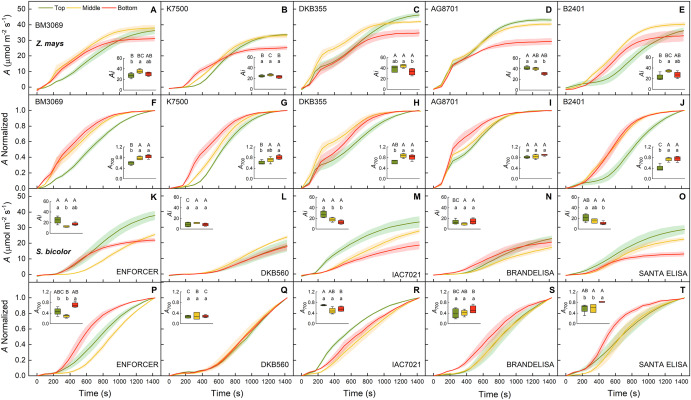
Photosynthesis induction varies along the canopies of Zea mays and Sorghum bicolor: linking fast responses and non-photochemical quenching relaxation to biomass production
Light variability throughout the canopy requires sophisticated control for the induction of photosynthesis and deactivation of photoprotective mechanisms, which could optimize CO2 assimilation and crop [...]
Corresponding author:
Rafael Leonardo Almeida
Photosynthesis induction varies along the canopies of Zea mays and Sorghum bicolor: linking fast responses and non-photochemical quenching relaxation to biomass production
Light variability throughout the canopy requires sophisticated control for the induction of photosynthesis and deactivation of photoprotective mechanisms, which could optimize CO2 assimilation and crop yield. This study aimed to investigate the genotypic variation in photosynthesis induction and the relaxation of non-photochemical quenching (NPQ) across the canopy of five Zea mays and Sorghum bicolor cultivars. CO2 uptake, stomatal conductance, and NPQ dynamics were recorded every 60 s during photosynthetic induction. Initially, leaves at the top, middle and bottom canopy positions were dark-acclimated and subsequently exposed to irradiation of 2000 μmol m−2 s−1, for 1420 s. The Z. mays cultivar AG8701 showed the highest dry matter (335.7 ± 7 g plant−1) and the fastest light response across the canopy, reaching 85 ± 2 % of total CO2 uptake 700 s after induction (A700). This performance was attributed to the synchrony among CO2 assimilation, stomatal conductance, effective quantum efficiency of photosystem II, and fast NPQ deactivation. In contrast, S. bicolor cultivars exhibited weak and negative correlations (r = ˗0.27 to ˗0.46) between dry matter and photosynthetic traits. DKB560 was the slowest cultivar (A700 = 28 ± 7 %) for light response, exhibiting no NPQ relaxation throughout the canopy when light intensity varied. S. bicolor dry matter correlated with leaf area (r = 0.90), suggesting a compensatory mechanism for slower photosynthetic induction and NPQ relaxation. These findings provide valuable insights into breeding programs aiming to select new cultivars with higher photosynthesis, light responsiveness, and increased leaf area, key traits for higher yield.
Rafael L. Almeida, Neidiquele M. Silveira, Heitor L. Sartori, Tamires S. Martins, Maximiliano S. Scarpari, Aildson P. Duarte, Eduardo Sawazaki, Eduardo C. Machado & Rafael V. Ribeiro
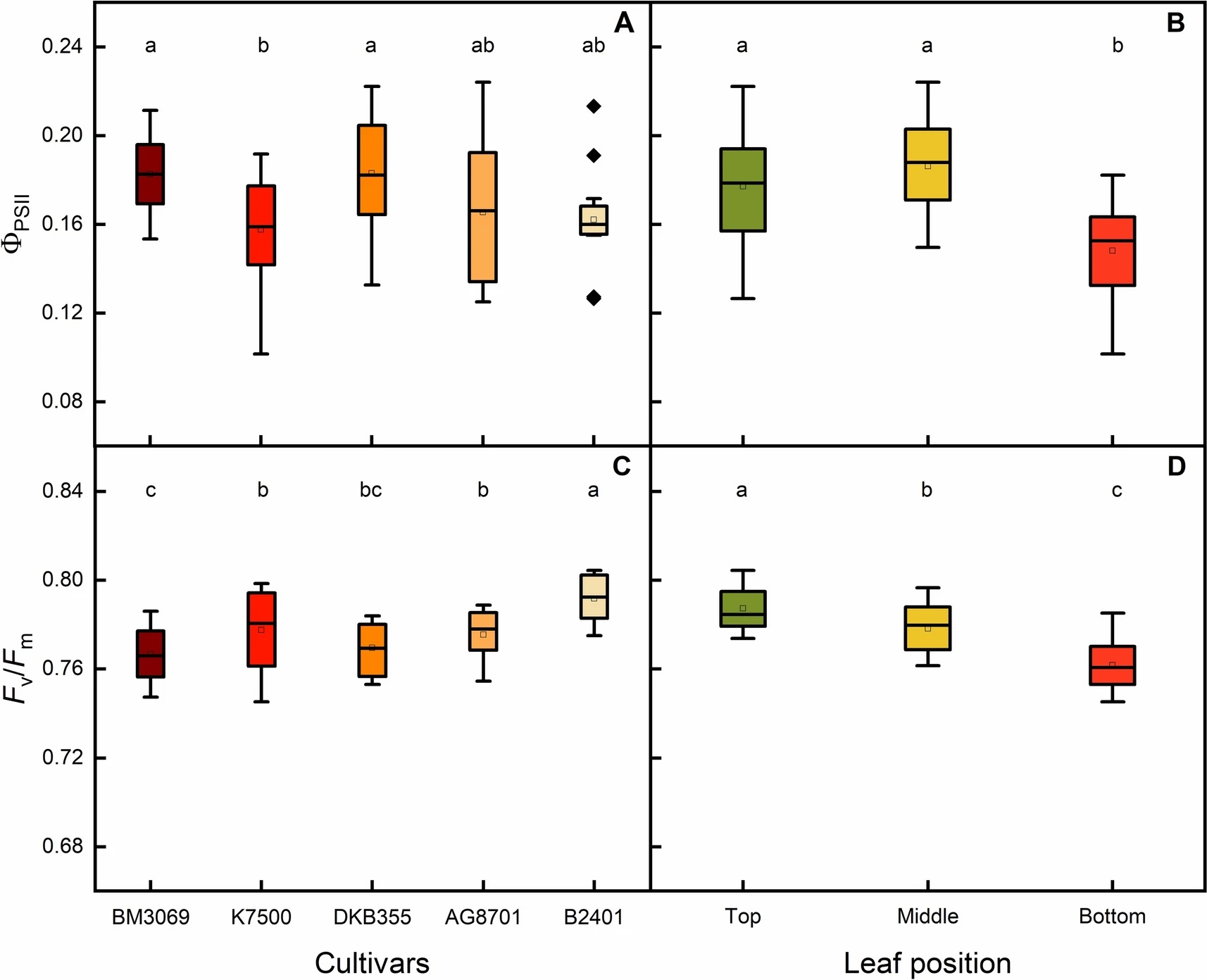
Exploring intra-specific variation in photosynthesis of maize and sorghum
Enhancing crop yield through improved photosynthesis is a key for feeding the global population and providing feedstock for a sustainable green economy. However, effectively linking photosynthetic performance [...]
Corresponding author:
Rafael Leonardo Almeida
Exploring intra-specific variation in photosynthesis of maize and sorghum
Enhancing crop yield through improved photosynthesis is a key for feeding the global population and providing feedstock for a sustainable green economy. However, effectively linking photosynthetic performance and biomass production in C4 species requires an integrative approach at plant canopy. This study aimed to characterize photosynthesis along the canopy of five maize (BM3069-PRO2, AG8701-PRO4, K7500-VIP3, DKB355-PRO3 and B2401-PWU) and sorghum (DKB560, Enforcer, IAC 7021, Brandelisa and Santa Elisa) cultivars, focusing on leaf gas exchange and chlorophyll fluorescence evaluations in three canopy strata: top, middle, and bottom. Photosynthetic responses to increasing intercellular CO2 concentration and light (A–Ci and A−PAR curves, respectively) were performed and key photosynthetic traits estimated. We found a significant variability in the maximum photosynthetic rates across the canopies. Modern maize cultivars exhibited high and uniform CO2 assimilation in the top and middle canopy leaves, demonstrating physiological adjustments for increasing canopy homogeneity in terms of photosynthesis. Such adjustments included high maximum quantum efficiency of CO2 assimilation (φ), stomatal conductance, carboxylation rates of phosphoenol pyruvate carboxylase (PEPC) and Ribulose-1,5-bisphosphate carboxylase/oxygenase (Rubisco), and leaf nitrogen concentration (LNC) along the canopy. In contrast, sorghum cultivars showed high variability among canopy strata, with DKB560 and Brandelisa standing out for their enhanced CO2 uptake and (φ) throughout the plant canopy. Our findings highlight maize as an efficient C4 crop, characterized by a high photosynthetic capacity and relative uniform photosynthesis across the canopy. This is attributed to reduced stomatal limitation and higher stomatal conductance, carboxylation of Rubisco (Vcmax) and LNC at the top and middle canopy, along with higher (φ) at the middle and bottom layers. Overall, physiological adjustments such as nitrogen redistribution to upper canopy leaves and the optimization of light-use efficiency in lower layers are key for enhancing canopy-level photosynthesis in maize and sorghum cultivars.
Rafael L. Almeida, Neidiquele M. Silveira, Heitor L. Sartori, Camila C. Carvalho, Maximiliano S. Scarpari, Aildson P. Duarte, Eduardo Sawazaki, Eduardo C. Machado & Rafael V. Ribeiro
Looking for a common bean ideotype with high photosynthesis and water-use efficiency under light fluctuation
High crop yield is needed to feed the global population but limiting environmental conditions constrain food production. Since high photosynthesis and water-use efficiency are two key traits for crop [...]
Corresponding author:
Rafael Leonardo Almeida
Looking for a common bean ideotype with high photosynthesis and water-use efficiency under light fluctuation
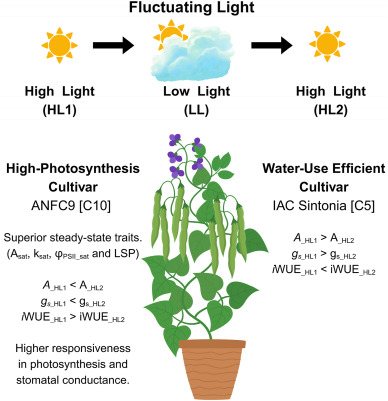
High crop yield is needed to feed the global population but limiting environmental conditions constrain food production. Since high photosynthesis and water-use efficiency are two key traits for crop yield in a changing world, we aimed to evaluate the photosynthetic performance and stomatal dynamics of twenty-six common bean genotypes under fluctuating light. Leaf gas exchange and chlorophyll fluorescence were evaluated on the middle leaflet of the first fully expanded leaf during high-low-high light transitions. Photosynthetic response curves to increasing light were also performed and key photosynthetic traits estimated. Seventeen physiological traits explained 94.5 % of the variation among common bean genotypes. Significant variability for photosynthesis, stomatal conductance and water-use efficiency was observed both during light fluctuation and under light saturation. TAA Dama, ANFC9, IAC Veloz and IPR Urutau presented the highest photosynthetic capacity to increasing light availability. Furthermore, IAC Sintonia, IAC2156 and IAC2157 were the most water-use efficient cultivars, due to their stomatal sluggishness and asynchronous behaviour between stomatal conductance and photosynthesis. The genetic diversity for photosynthesis and stomatal conductance found in this study provides the basis for breeding and illustrates the potential of exploiting natural variation for increasing photosynthesis and yield while optimizing water-use efficiency.
Rafael L. Almeida, Neidiquele M. Silveira, Marcela T. Miranda, Alisson F. Chiorato, Sérgio A. M. Carbonell, Eduardo C. Machado & Rafael V. Ribeiro
Blue light increases stomatal conductance and photosynthesis in an Agave hybrid
Blue light (BL) plays an important role in stomatal opening, finely tuning plant responses to environmental conditions. While the BL signaling pathway is well understood in C3 and C4 plants, its role [...]
Corresponding author:
Heitor L. Sartori
Blue light increases stomatal conductance and photosynthesis in an Agave hybrid
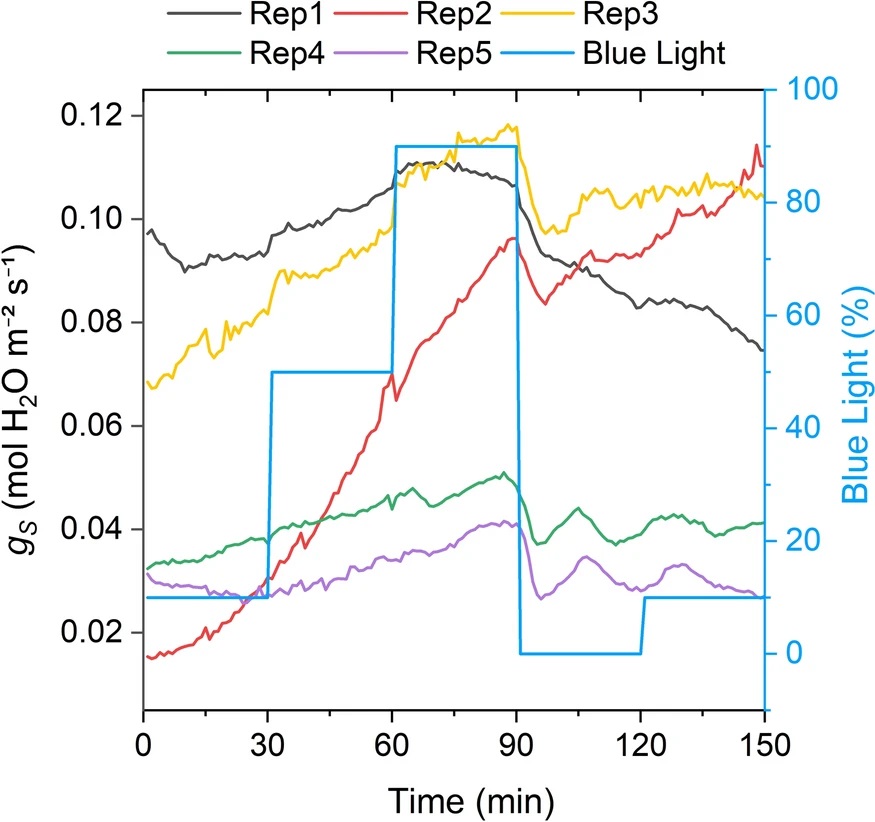
Blue light (BL) plays an important role in stomatal opening, finely tuning plant responses to environmental conditions. While the BL signaling pathway is well understood in C3 and C4 plants, its role in crassulacean acid metabolism (CAM) plants remains uncertain. Traditionally, stomata in CAM plants were considered insensitive to BL stimulation, and as a result, research on such interaction was overlooked for a long time. Only recently, studies have found that the BL signaling cascade is active in CAM plants. Here, we investigated the effects of BL irradiance on stomatal responses in Agave, a highly productive CAM plant, by stimulating Agave leaves with BL and taking measurements of leaf gas exchange during the morning (closed stomata) and in the afternoon (open stomata). Our findings revealed that BL had no significant effect on stomatal opening during the morning period. However, BL increased stomatal conductance (gs) by 67.3%, photosynthetic rate (A) by 109.5%, and intrinsic water use efficiency (iWUE) by 69.5% in the late afternoon. These findings suggest that Agave responded to BL similarly to C3 and C4 species when stomata were already open. We hypothesized (for future studies) that high CO2 concentrations due to C4 acid decarboxylation during the morning act as a repressive factor for stomatal opening by inhibiting the phosphorylative activity of the HT1 protein, a key protein involved in stomatal response. This inhibition likely prevents the activation of the signaling pathway mediated by CBC1/2 kinase, which integrates BL signals with low intercellular CO2 concentrations.
Heitor L. Sartori, Sávio J. da Silva, Larissa P. da Cruz, Matheus D. Laira, Fábio T. Raya, Gonçalo A. G. Pereira & Rafael V. Ribeiro
Stress memory increases cane yield and juice quality of field-grown sugarcane
Intergenerational drought memory has been studied in several sexually reproducing plant species, but the occurrence of this phenomenon and the potential effects on yield of clonal plants are unknown. [...]
Corresponding author:
Maria Dolores Pissolato
Stress memory increases cane yield and juice quality of field-grown sugarcane
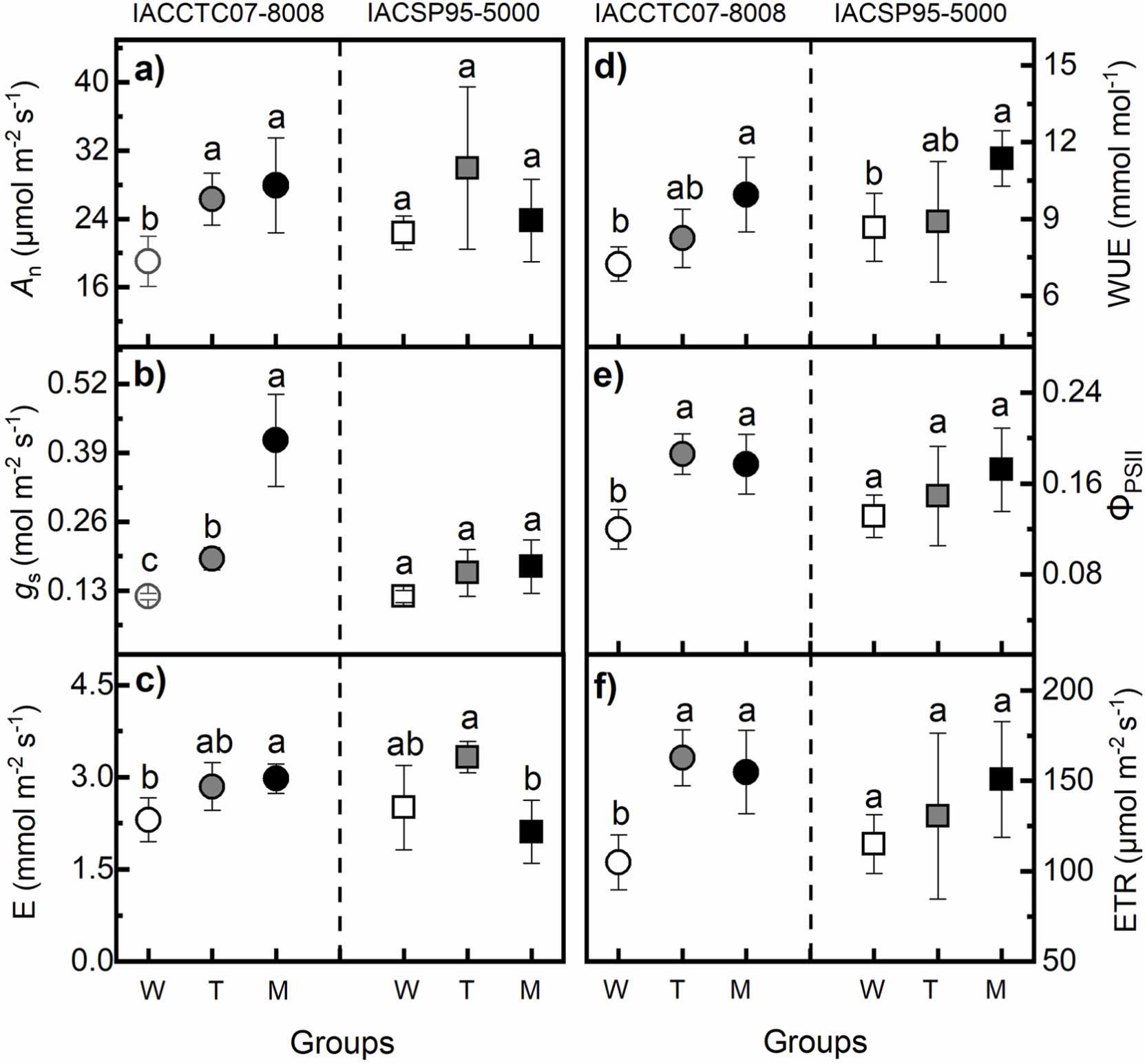
Intergenerational drought memory has been studied in several sexually reproducing plant species, but the occurrence of this phenomenon and the potential effects on yield of clonal plants are unknown. We investigated the effects of intergenerational drought memory on productivity of sugarcane propagules obtained from plants previously stressed at two phenological stages. Firstly, IACCTC07–8008 (drought tolerant) and IACSP95–5000 (high-yielding) cultivars were grown under well-hydrated conditions (group W) or subjected to three cycles of water deficit through water withholding during the tillering (group T) or maturation (group M) stage. Then, propagules from these three groups were grown under field conditions. Propagules from groups T and M of IACCTC07–8008 showed enhanced photosynthesis, attributed to increased stomatal conductance, photochemical activity, Rubisco carboxylation, and a larger root system. Group M of IACCTC07–8008 exhibited reduced ascorbate peroxidase activity, leading to increased H2O2 concentration without causing oxidative damage. This group also showed improved juice quality – such a higher sucrose content. The stalk yield, shoot biomass, leaf area index and tiller density of the group M of IACCTC07–8008 and group T of IACSP95–5000 were increased as a consequence of intergenerational drought memory. Although both cultivars have “inherited” drought memory, our findings suggest that parental stress memory varies between cultivars and phenological stages in sugarcane. This research is the first to demonstrate the impact of intergenerational drought memory on yield and juice quality in field-grown sugarcane, providing valuable insights for enhancing drought tolerance strategies in sugarcane production, with significant potential benefits for the industry.
Maria D. Pissolato, Larissa P. Cruz, Rafael L. Almeida, Tamires S. Martins, Eduardo C. Machado, Júlio C. Garcia, Marcos G.A. Landell, Mauro A. Xavier & Rafael V. Ribeiro
Pre-anthesis phosphorus sprays boost reproductive development and seed yield in heat-stressed Phaseolus vulgaris L.
Climate change intensifies heat waves, threatening global food security. Common bean (Phaseolus vulgaris L.) is highly sensitive to heat waves during flowering, which disrupts source-sink relationships, [...]
Corresponding author:
Matheus D. Laira
Pre-anthesis phosphorus sprays boost reproductive development and seed yield in heat-stressed Phaseolus vulgaris L.
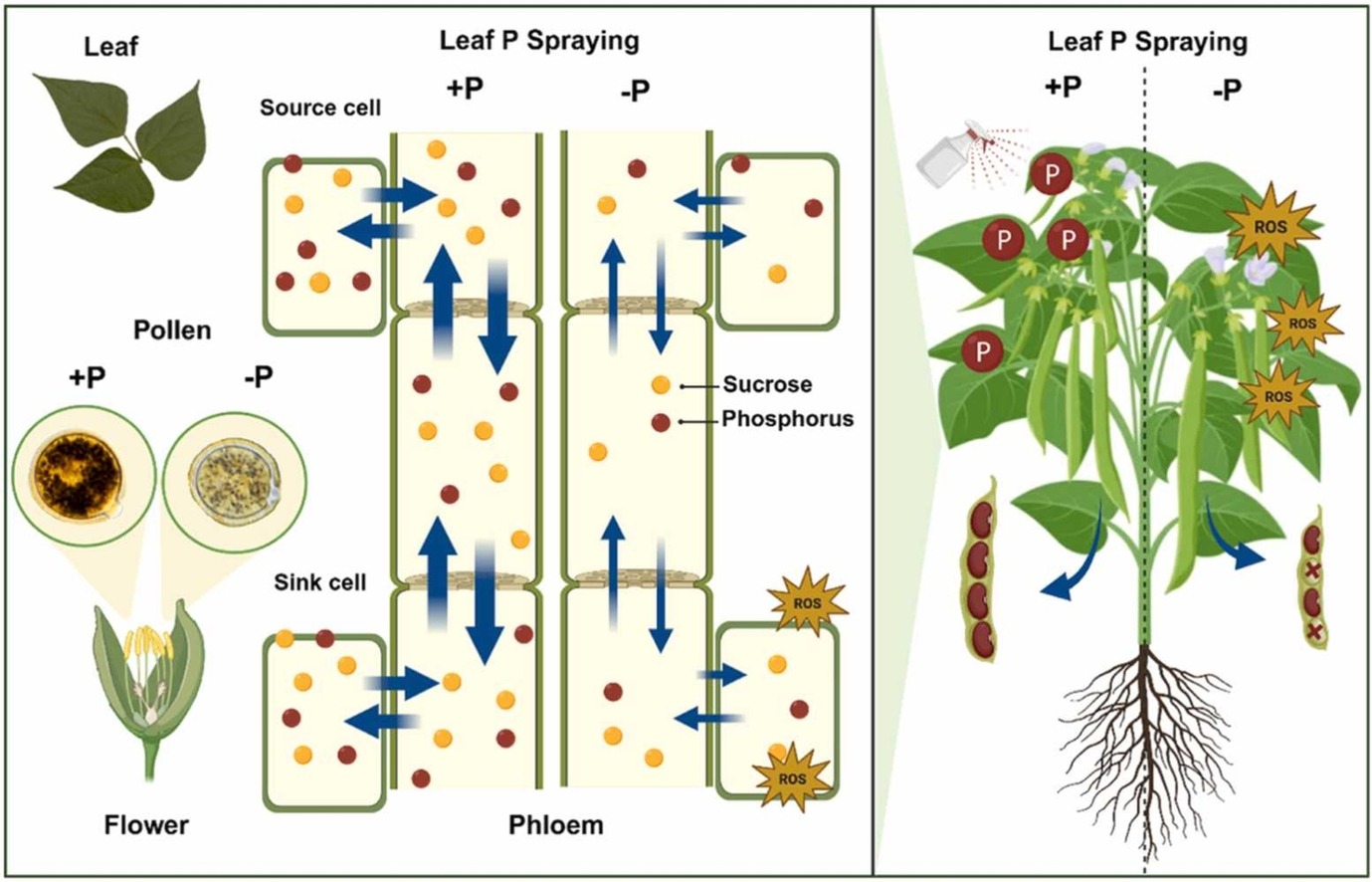
Climate change intensifies heat waves, threatening global food security. Common bean (Phaseolus vulgaris L.) is highly sensitive to heat waves during flowering, which disrupts source-sink relationships, reduces pollen viability, and diminishes seed yield. Phosphorus (P) deficiency further limits carbohydrate transport to reproductive tissues during heat waves. This study evaluated the efficacy of leaf P spraying in mitigating heat wave effects in common bean plants facing P deficiency (PD) and P sufficiency (PS) during flowering, i.e., phenological phases V4 to R6. A complete factorial experiment evaluated two substrate P availability during flowering (PD and PS), two leaf P spraying treatments applied during the pre-anthesis (without P spraying, -P; and with P spraying, +P), and two air temperature regimes during flowering: control (28/18 °C, day/night) and heat wave (38/28 °C, day/night). Preventive leaf P spraying improved photochemical efficiency, reduced oxidative stress, and avoided decreases in photosynthetic pigment content under heat wave. P-sprayed plants exhibited greater starch deposition in pollen grains and higher soluble carbohydrate concentration, showing less cellular damage caused by heat wave. As a result, leaf P spraying also increased seed yield under heat wave by sustaining pollen viability owing to improved supply of soluble carbohydrates to reproductive structures. These findings underscore the critical role of leaf P spraying in alleviating heat wave and impaired P acquisition in common bean during flowering by enhancing reproductive resilience and yield stability. This study highlights the potential of such a strategy of preventive leaf P spraying at critical phenological phases to improve crop performance under heat wave conditions caused by climate change.
Matheus D. Laira, Diego da S. Graciano, Sara A.L. Andrade, Fernando C.B. Zambrosi & Rafael V. Ribeiro
Assessment of the impact of biodegradable lignin nanoparticles encapsulating IAA on tomato development: from seed to fruit
Polymeric nanoparticles have emerged as promising nanocarriers for plant growth regulators (PGRs) in agriculture, enhancing plant growth and boosting fruit and cereal yields. Among these, lignin nanoparticles [...]
Corresponding author:
Rafael Vasconcelos Ribeiro
Assessment of the impact of biodegradable lignin nanoparticles encapsulating IAA on tomato development: from seed to fruit
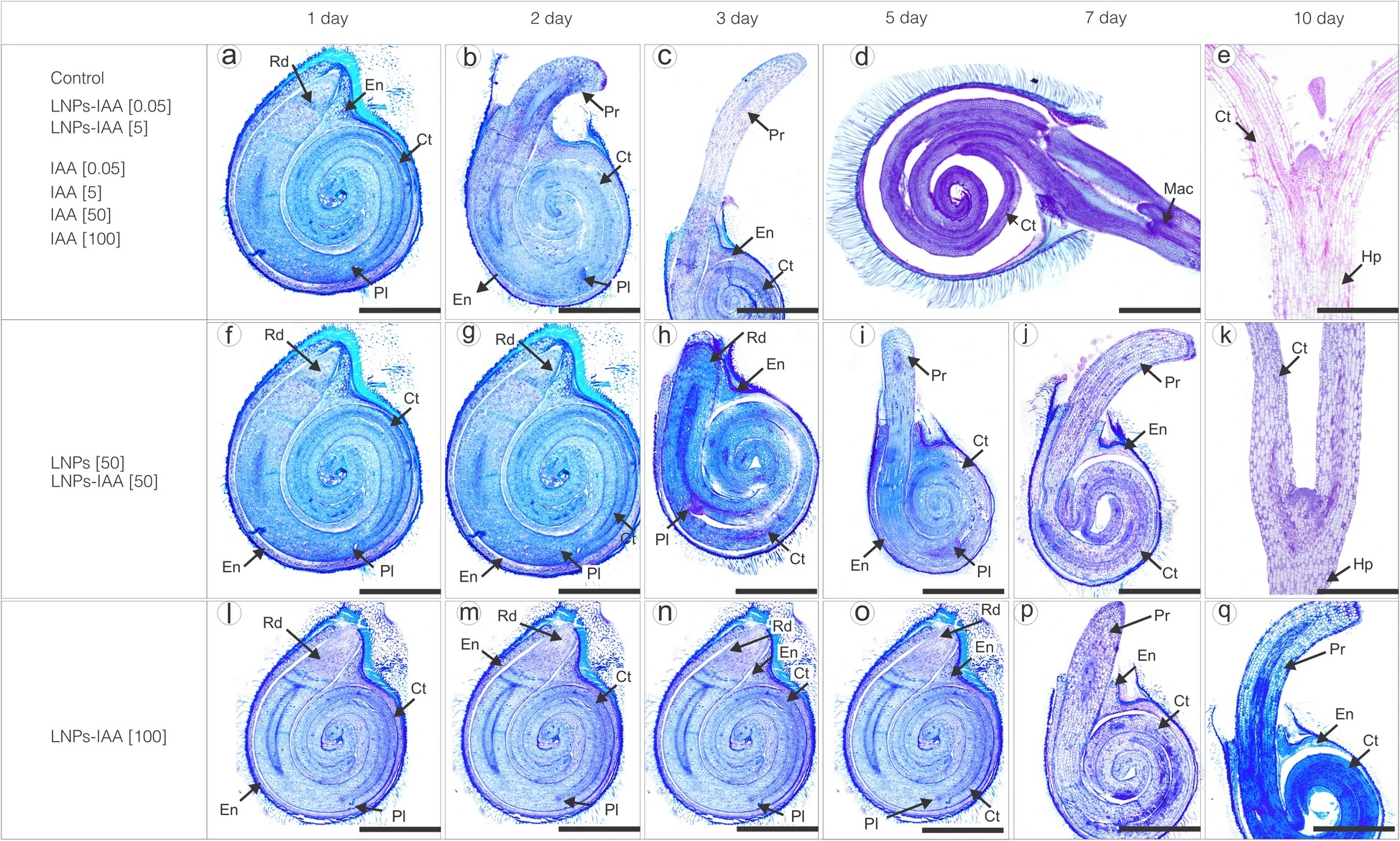
Polymeric nanoparticles have emerged as promising nanocarriers for plant growth regulators (PGRs) in agriculture, enhancing plant growth and boosting fruit and cereal yields. Among these, lignin nanoparticles (LNPs) stand out due to their biodegradability and low production cost. However, few studies have evaluated the biological effects of LNPs encapsulating PGRs — particularly their dose-dependent impacts across the entire plant life cycle. Therefore, our study aims to evaluate the efficiency of lignin nanoparticles (LNPs) encapsulating indole-3-acetic acid (IAA) compared with free application of the hormone. We employed a multidisciplinary approach to comprehensively assess the impacts of different LNPs-IAA concentrations. Germination tests and morphometric analyses were conducted, along with anatomical analyses of seeds, seedlings, and vegetative organs using light microscopy. Confocal microscopy analyses to examine LNP uptake and translocation. Additionally, leaf gas exchange parameters and photosynthetic pigment levels were measured. The lignin nanoparticles were also characterized in terms of length, polydispersity index, zeta potential and encapsulation efficiency. All variables were subjected to normality tests, variance analysis, and post-hoc tests. Structural analysis revealed that LNP application did not alter overall plant anatomy architecture, except for inducing differences in xylem area among vegetative organs. Additionally, LNPs were rapidly absorbed by seeds in less than 5 h and were transported exclusively via the apoplastic pathway. The composition of lignin nanoparticles influenced germination rates and time. Application with lower concentrations showed minimal statistical significance, whereas higher concentrations exhibited phytotoxic effects. Thus, our study highlights the critical importance of optimizing nanocarrier concentrations for plant growth enhancement, demonstrating that lignin nanoparticles (LNPs) represent a promising nanoformulation for bioactive compound encapsulation.
Rodrigo Faleiro, Magda A. Tessmer, Anderson E. S. Pereira, Leonardo F. Fraceto, Marcelle S. Rampasso, Marcela T. Miranda, Maria D. Pissolato, Fábio Cassola, Rafael V. Ribeiro & Juliana L. S. Mayer
Field-based prediction of sugarcane photosynthesis through environmental inputs
Sugarcane (Saccharum officinarum) is a highly productive C4 crop prevalent in tropical and subtropical areas. However, its photosynthetic efficiency is influenced by environmental factors such as light, [...]
Corresponding author:
Rafael Leonardo Almeida
Field-based prediction of sugarcane photosynthesis through environmental inputs
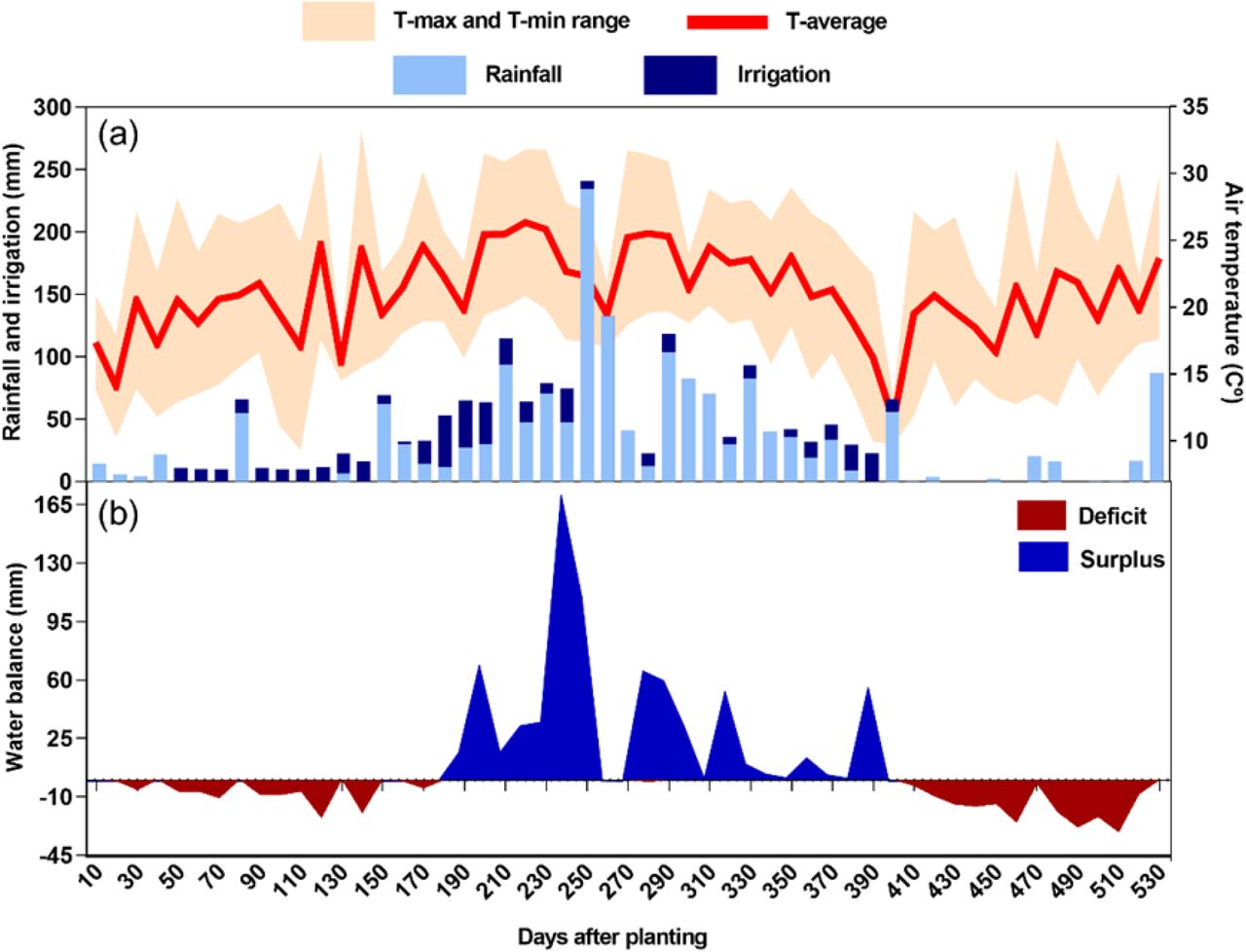
Sugarcane (Saccharum officinarum) is a highly productive C4 crop prevalent in tropical and subtropical areas. However, its photosynthetic efficiency is influenced by environmental factors such as light, moisture and temperature. Understanding these interactions is critical for optimizing yields and addressing climate-related challenges. This study investigated the effects of environmental variables on carbon assimilation in four Brazilian sugarcane varieties (SP79-1011, IAC94-2094, IACSP94-2101 and IACSP95-5000), addressing both optimal and limiting conditions for key parameters. Over a 530-day field experiment, data were collected every 30 days from 7:00 to 17:00, measuring diurnal CO2 assimilation (A), photosynthetically active radiation (PAR), vapor pressure deficit (VPD), and air temperature. Polynomial models and multiple linear regression were used to quantify the contributions of these variables in CO2 uptake, yielding robust model fits (p<0.05, R2 = 0.84–0.99). Herein, optimal photosynthetic performance occurred under PAR at 1800 μmol m−2 s−1, VPD at 2.34 kPa, and air temperature close to 32.5°C. A strong correlation (r = 0.92, p<0.001) between observed and predicted photosynthesis and high model efficacy (R2=0.60, p<0.001) underscored the reliability of the approach, explaining 60% of the observed variation. While the results highlighted the model’s effectiveness in predicting sugarcane photosynthetic rates under varying diurnal and seasonal conditions, deviations indicated the influence of unmeasured parameters and complex interactions that need further investigation. These findings provide valuable insights to refine sugarcane management practices, enhance yield potential, and improve crop resilience under climate change scenarios.
Rafael L. Almeida, Tamires S. Martins, José R. Magalhães Filho, Regina C. M. Pires, Marcos G. A. Landell, Mauro A. Xavier, Eduardo C. Machado & Rafael V. Ribeiro
Leaf phenology determines the response of poplar genotypes to O3 through mesophyll conductance
Tropospheric ozone (O3) is a phytotoxic air pollutant that impairs photosynthesis. The mechanisms of O3-induced reduction of mesophyll conductance (gm) are not clear. We investigated the interaction of [...]
Corresponding author:
Rafael Vasconcelos Ribeiro
Leaf phenology determines the response of poplar genotypes to O3 through mesophyll conductance
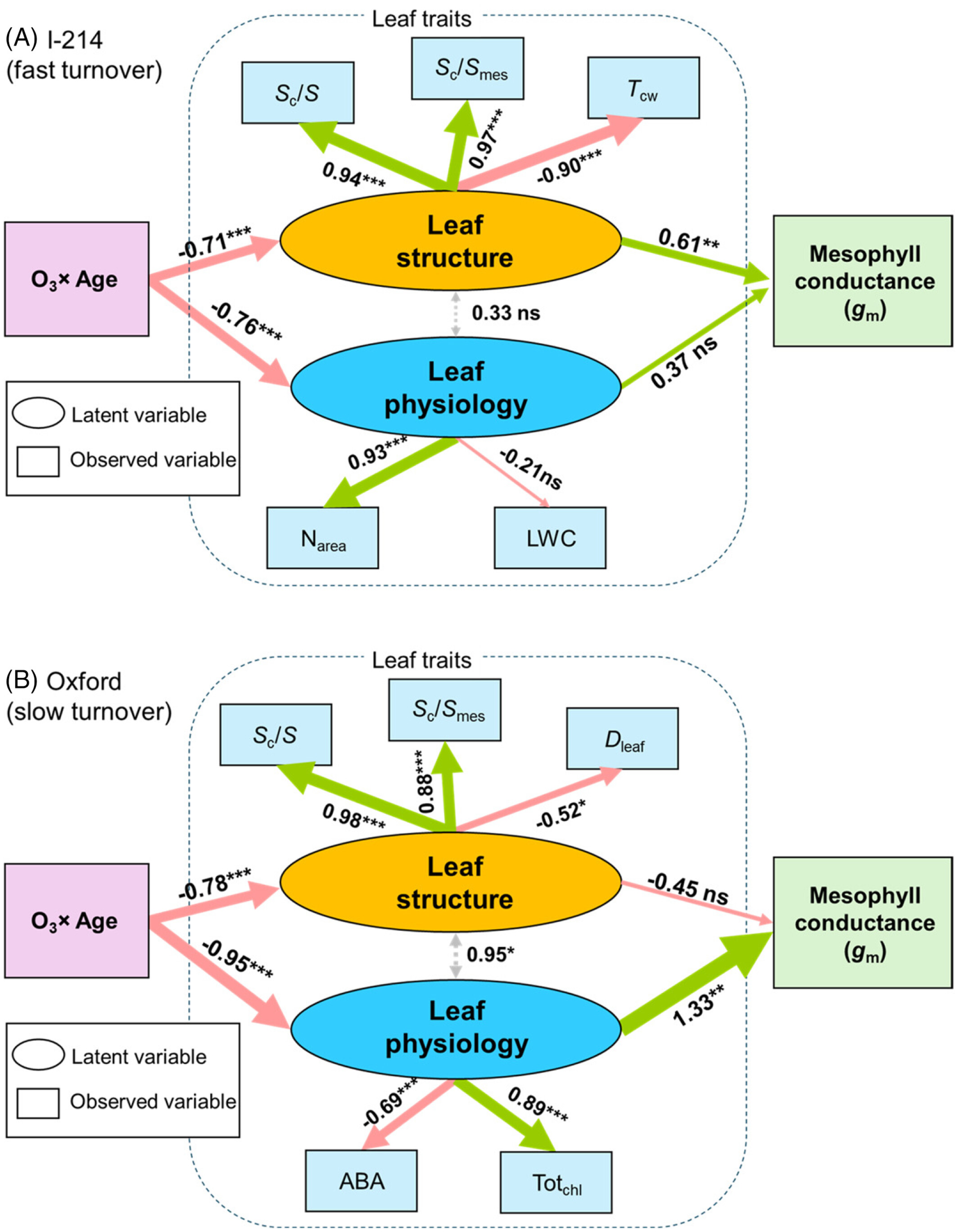
Tropospheric ozone (O3) is a phytotoxic air pollutant that impairs photosynthesis. The mechanisms of O3-induced reduction of mesophyll conductance (gm) are not clear. We investigated the interaction of O3 and leaf age on gm by using structural equation modelling (SEM) for two poplar clones (I-214 and Oxford) exposed to three O3 levels (ambient air, AA; 1.5 × AA; 2.0 × AA) in a free-air controlled experiment. Clone-specific phenological responses to elevated O3 were found: I-214 showed a rapid leaf turnover and formed new productive leaves, whereas Oxford was more ‘conservative’ maintaining old or injured leaves. In the I-214 clone with fast leaf turnover, gm was reduced due to increasing cell wall thickness in new leaves, a possible reaction to increase its resistance against O3 damage. As I-214 leaves aged, a decrease in the fraction of the mesophyll surface area unoccupied by chloroplasts was observed at 2.0 × AA prior to a reduction in photosynthesis. In the Oxford clone with slow leaf turnover, gm was mainly affected by physiological rather than structural factors: in particular, a marked reduction of gm caused by abscisic acid (ABA) was noticed. As photosynthesis is limited by diffusional barriers, O3 effects on gm will be key for carbon sequestration modelling of O3 pollution and climate change.
Yasutomo Hoshika, Elena Paoletti, Claudia Pisuttu, Lorenzo Cotrozzi, Matthew Haworth, Elisa Pellegrini, Cristina Nali, Rafael V. Ribeiro, Juliana L. S. Mayer & Barbara B. Moura
Root Development of Tomato Plants Infected by the Cacao Pathogen Moniliophthora perniciosa Is Affected by Limited Sugar Availability
Moniliophthora perniciosa is the causal agent of the witches' broom disease of cacao (Theobroma cacao), and it can infect the tomato (Solanum lycopersicum) ‘Micro-Tom’ (MT) cultivar. Typical symptoms [...]
Corresponding author:
Rafael Vasconcelos Ribeiro
Root Development of Tomato Plants Infected by the Cacao Pathogen Moniliophthora perniciosa Is Affected by Limited Sugar Availability
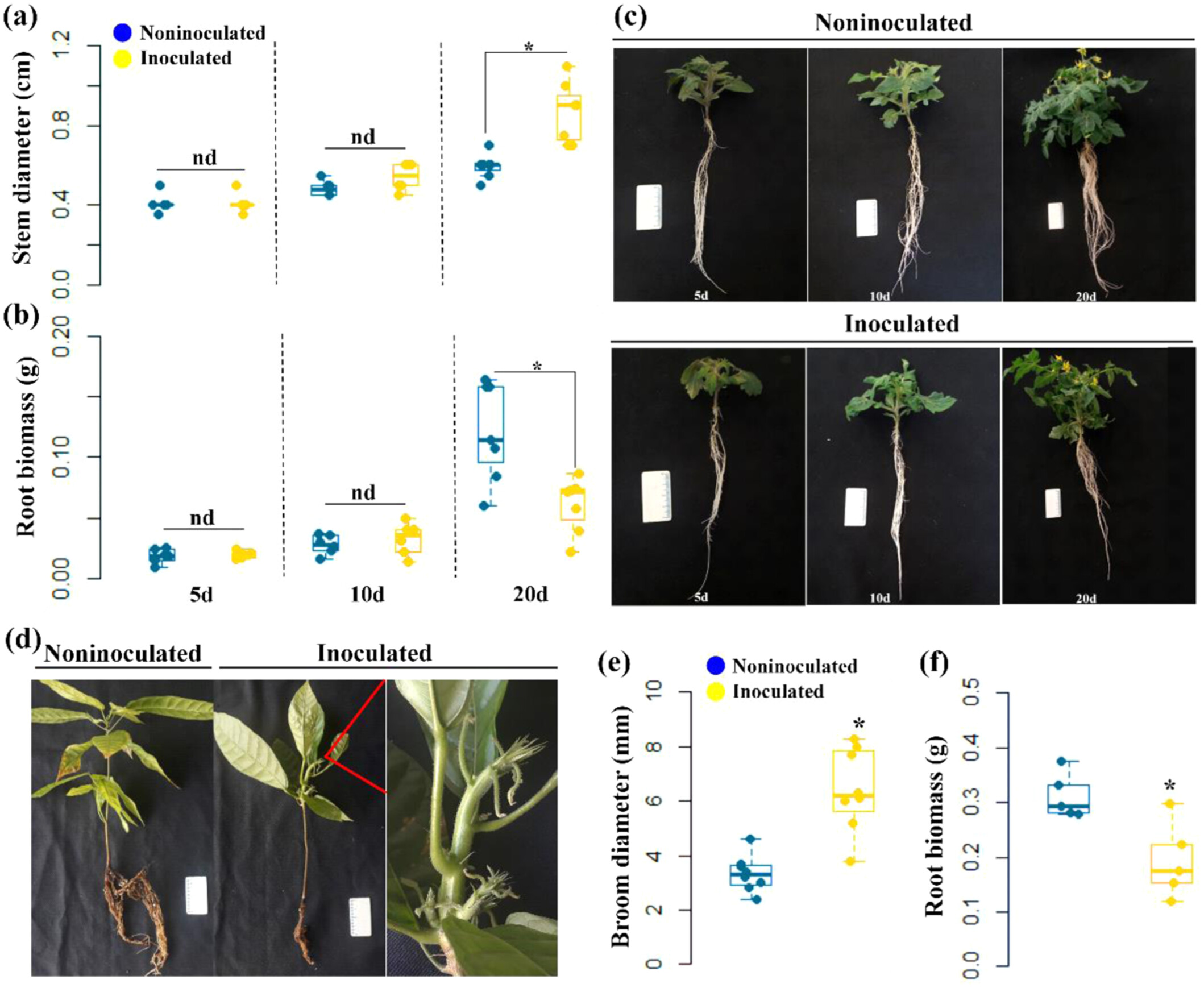
Moniliophthora perniciosa is the causal agent of the witches' broom disease of cacao (Theobroma cacao), and it can infect the tomato (Solanum lycopersicum) ‘Micro-Tom’ (MT) cultivar. Typical symptoms of infection are stem swelling and axillary shoot outgrowth, whereas reduction in root biomass is another side effect. Using infected MT, we investigated whether impaired root growth derives from hormonal imbalance or sink competition. Intense stem swelling coincided with a reduction in root biomass, predominantly affecting lateral roots. RNA-seq analyses of root samples identified only a few differentially expressed genes involved in hormone metabolism, and root hormone levels were not expressively altered. Inoculation of the auxin highly-sensitive entire mutant genotype maintained the impaired root phenotype; in contrast, the low-cytokinin MT transgenic line overexpressing CYTOKININ OXIDASE-2 (35S::AtCKX2) with fewer symptoms did not exhibit root growth impairment. Genes involved in cell wall, carbohydrate, and amino acid metabolism were downregulated, accompanied by lower levels of carbohydrate and amino acid in roots, suggesting a reduction in metabolite availability. 13CO2 was supplied to MT plants, and less 13C was detected in the roots of infected MT but not in those of 35S::AtCKX2 line plants, suggesting that cytokinin-mediated sugar sink establishment at the infection site may contribute to impaired root growth. Exogenous sucrose application to roots of infected MT plants partially restored root growth. We propose that the impairment of lateral root development is likely attributed to disrupted sugar signalling and photoassimilate supply by establishing a strong sugar sink at the infected stem.
Daniele Paschoal, Laura Cazetta, João V. O. Mendes, Nathália C. F. Dias, Vitor Ometto, Esther Carrera, Mônica L. Rossi, Juliana A. Aricetti, Piotr Mieczkowski, Gabriel G. Carvalho, Igor Cesarino, Simone F. da Silva, Rafael V. Ribeiro, Paulo J. P. L. Teixeira, Eder M. da Silva & Antonio Figueira
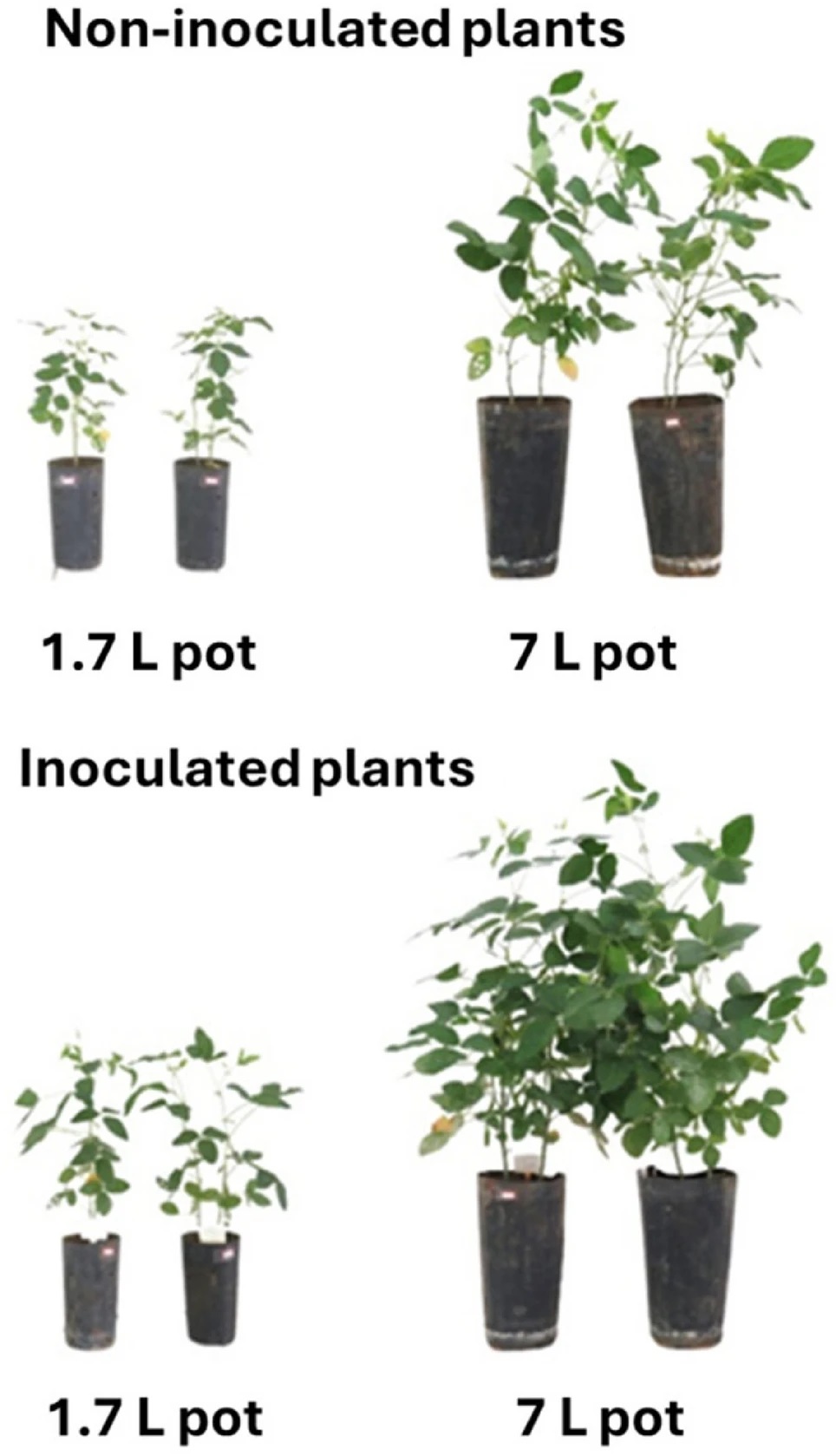
Small Pot Size Limits Soybean Growth and Affects the Symbiosis with Bradyrhizobium japonicum
Small pots limit root and shoot growth in several plant species. In this work, we investigated the effect of pot size (1.7 L and 7 L) on nodulation with Bradyrhizobium japonicum and soybean growth. Small [...]
Corresponding author:
Rafael Vasconcelos Ribeiro
Small Pot Size Limits Soybean Growth and Affects the Symbiosis with Bradyrhizobium japonicum
Small pots limit root and shoot growth in several plant species. In this work, we investigated the effect of pot size (1.7 L and 7 L) on nodulation with Bradyrhizobium japonicum and soybean growth. Small pots restricted the growth of shoots and roots of inoculated and non-inoculated plants and reduced the number of nodules, confirming that pot size interfered with nodule establishment. Plants in small pots had a significant accumulation of calcium (Ca) and boron (B) in the leaves but showed minimal changes in photosynthesis-related parameters. In large pots, inoculated plants showed higher leaf nitrate concentrations and total protein contents, with lower ureide concentrations than plants in small pots. Increased nitrogen use efficiency in plants grown in large pots probably contributed to the higher chlorophyll concentration, leaf area, and pod production when compared to ones in small pots. These findings show that restricting root zone in small pots affects growth and plant nodulation, altering nitrogen metabolism in soybeans. Our results highlight the importance of using large pots in research experiments to mitigate the underestimation of various biochemical responses and better understand the physiological reaction of soybean plants to nodulation. In conclusion, the optimization of pot size in experimental setups is essential for accurately assessing the effects of rhizobial inoculation on soybean performance.
Gabrielle H. Cassiano, Jessica F. Diniz, Bruno S. Floreste, Alessandro A. Yokoyama, Ana Isa M. R. Machado, Rafael V. Ribeiro, Sara A. L. de Andrade & Paulo Mazzafera
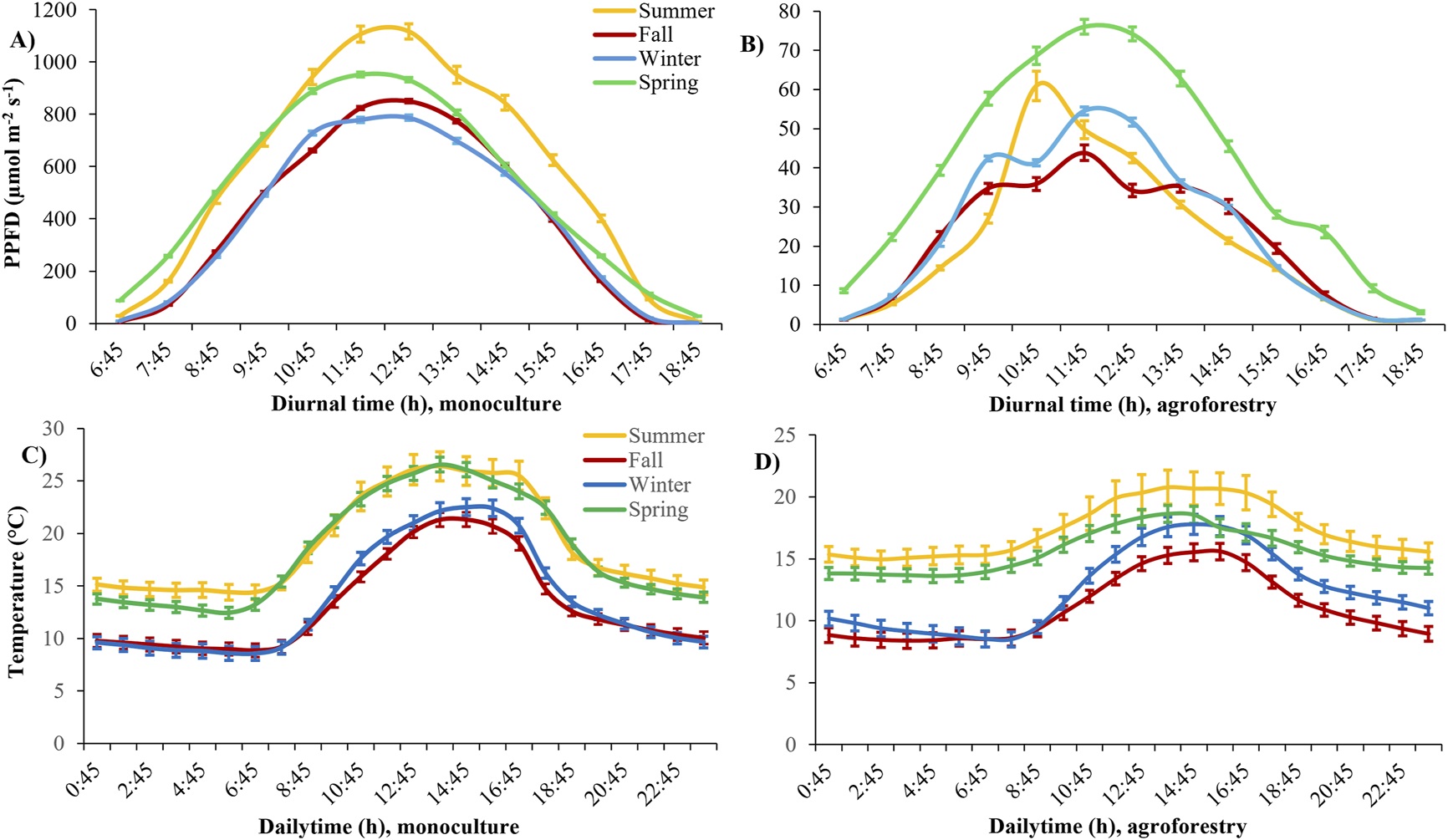
Expression of secondary sexual dimorphism in photosynthetic performance of Ilex paraguariensis under contrasted light availability of monoculture and agroforestry during annual rhythmic growth
Plants have developed specific mechanisms to tackle environmental challenges. During one annual period, a dioecious yerba mate with rhythmic growth can present two growth units (GU1 and GU2) intercalated [...]
Corresponding author:
Miroslava Rakocevic
Expression of secondary sexual dimorphism in photosynthetic performance of Ilex paraguariensis under contrasted light availability of monoculture and agroforestry during annual rhythmic growth
Plants have developed specific mechanisms to tackle environmental challenges. During one annual period, a dioecious yerba mate with rhythmic growth can present two growth units (GU1 and GU2) intercalated with two rest periods (R1 and R2). We hypothesized that photosynthetic performance will be much higher under monoculture (MO, high light) than under an agroforestry system (AFS, low light) over annual growth and that secondary sexual dimorphism (SSD) will be more expressed during rest than during growth periods. We evaluated the maximum net photosynthesis (Amax), apparent quantum efficiency of CO2 assimilation (Ф), respiration rate in the dark (Rd) and in the light (RL), RL/Rd ratio, maximum apparent rate of electron transport (Jmax), maximum apparent RuBisCO carboxylation rate (Vcmax), Jmax/Vcmax ratio, and chlorophyll indexes in four (two male and two female) clones. Light was reduced by 92%–95% in AFS compared to MO. Photosynthetic traits generally varied over the annual rhythmic growth and revealed higher photosynthetic performance under MO than AFS. Lower Amax and Rd in all clones under AFS than MO occurred together with higher inhibition of respiration by light (low RL/Rd) under AFS than MO. Despite the strong effect of cultivation systems and growth rhythmicity on photosynthetic traits, our data did not suggest that the frequency of SSD in photosynthetic performance (with the exception of the Jmax/Vcmax ratio) was related to the cultivation system or period of rhythmic growth. The SSD was expressed in a higher Chl b index and lower Chl a/b ratio in female than male plants during R2 and GU2, indicating lower sensitivity of females to extreme light conditions of two cultivation systems than males. Higher Amax and similar respiration rates (Rd and RL) in females compared to in males in early vegetative phases after pruning (herein R1 and GU1) could be considered as a fitness strategy of female plants in their additional effort to produce fruits and seeds in latter phases. Our results additionally revealed the importance of the evaluation period when assessing photosynthesis in plant species with rhythmic growth.
Miroslava Rakocevic, Eunice R. Batista, Rafael L. Almeida, Ivar Wendling & Rafael V. Ribeiro
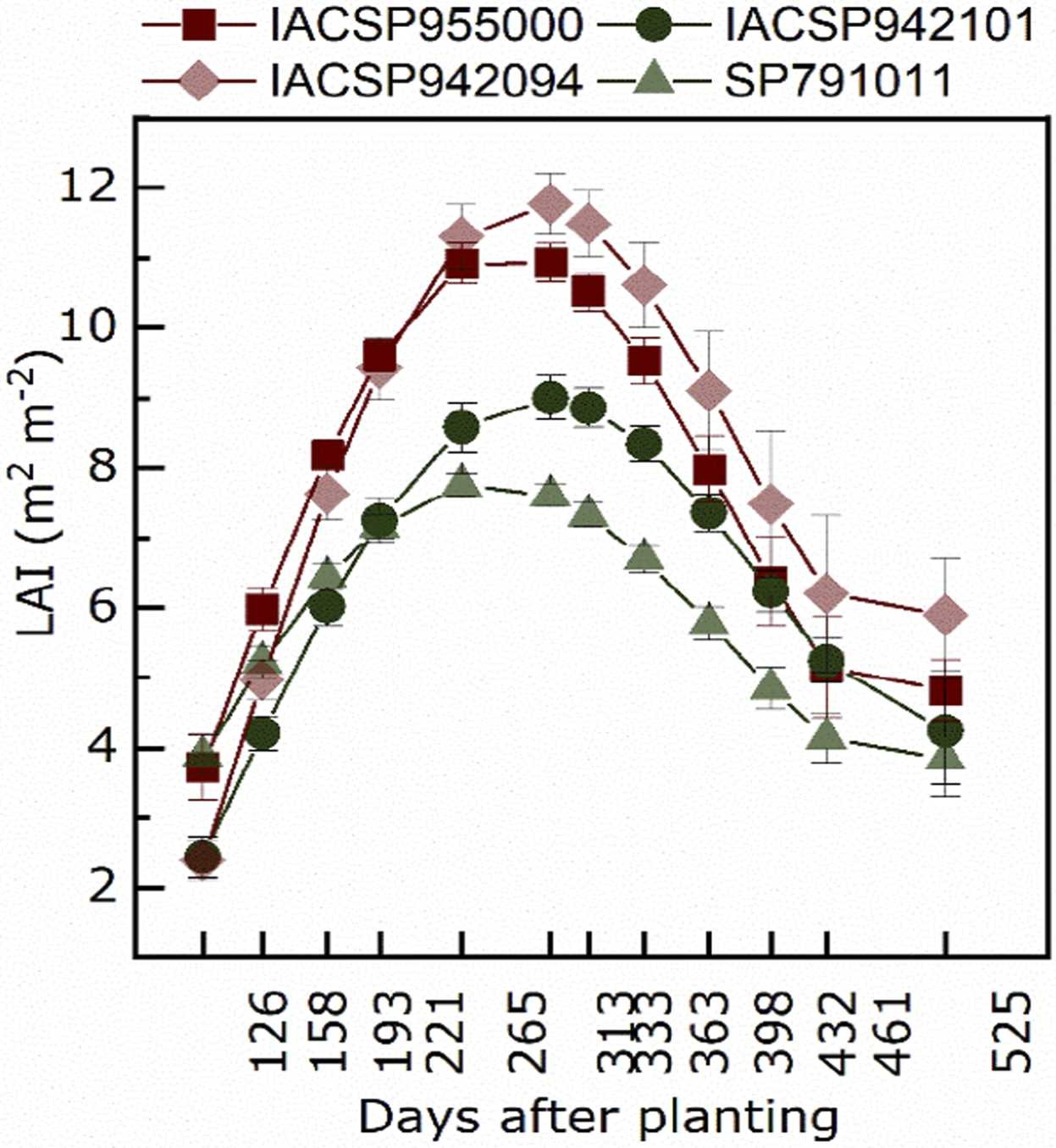
Light interception and conversion efficiencies and biomass partitioning in sugarcane varieties with varying canopy architecture under subtropical conditions
Crop yield is determined by available solar energy and crop efficiency in intercepting light and converting such energy into biomass. However, such processes remain poorly understood in field-grown sugarcane [...]
Corresponding author:
Tamires da Silva Martins
Light interception and conversion efficiencies and biomass partitioning in sugarcane varieties with varying canopy architecture under subtropical conditions
Crop yield is determined by available solar energy and crop efficiency in intercepting light and converting such energy into biomass. However, such processes remain poorly understood in field-grown sugarcane under subtropical conditions. We aimed to estimate the efficiencies underlying crop yield in four sugarcane varieties with varying canopy architecture, revealing the genotypic variation and how environmental conditions affect the light interception efficiency (εi), light conversion efficiency (εc) and partitioning efficiency (εp). Classical growth analysis and measurements of incident and transmitted light through sugarcane canopies and leaf nitrogen content were done along the crop cycle. At harvest, technological analyses were performed in stalks, and cane and sugar yields were determined for IACSP95–5000 and IACSP94–2094 (planophile-like canopy), IACSP94–2101 and SP79–1011 (erectophile-like canopy) varieties. IACSP95–5000 and IACSP94–2101 are responsive to water availability and present high yield, while IACSP94–2094 and SP79–1011 are drought-resistant and recommended for limiting environments. Planophile-like varieties exhibited higher εi compared to erectophile-like ones, with the latter ones showing εi below 0.8. The highest εi was noticed in IACSP95–5000, reaching 0.9. Conversely, the highest εc of 0.097 J J−1 was found in IACSP94–2101, an erectophile-like variety. All varieties exhibited decreased εc under water deficit and low temperature, which happened during the winter season. Additionally, low leaf nitrogen content was found to contribute to low εc in IACSP95–5000 and IACSP94–2101. Reductions in εc were associated with the phenomenon of reduced growth, for the first time reported in Brazilian varieties. There were no differences in εp among sugarcane varieties, ranging from 0.86 to 0.88. However, the sugar yields of IACSP95–5000, IACSP94–2101 and IACSP94–2094 were higher than one found for SP79–1011. Notably and despite IACSP94–2101 having the highest εc, its sugar yield was comparable to that of IACSP95–5000, which exhibited the highest εi. Both εi and εc determined sugarcane yield, with high εi compensating low εc and vice-versa in varieties differing in canopy architecture. Erectophile-like varieties improved light distribution within the canopy, but planophile like varieties exhibited superior canopy development and light interception. IACSP95–5000, IACSP94–2101, and IACSP94–2094 achieved higher sugar yields compared to SP79–1011, which was caused by higher leaf expansion, growth rate, εi, and εc.
Tamires S. Martins, José R. M. Filho, Larissa P. Cruz, Rafael L. Almeida, Paulo E.R. Marchiori, André L.B.O. Silva, Regina C.M. Pires, Marcos G.A. Landell, Mauro A. Xavier, Eduardo C. Machado & Rafael V. Ribeiro

Drought responses in Coffea arabica as affected by genotype and phenophase. II – photosynthesis at leaf and plant scales
The aim of this work was to compare gas exchanges from leaf to whole plant scales, in two Ethiopian accessions (‘E083’ and ‘E027’), and two bred cultivars (Iapar 59 and Catuaí 99) of Arabica coffee (Coffea [...]
Corresponding author:
Miroslava Rakocevic
Drought responses in Coffea arabica as affected by genotype and phenophase. II – photosynthesis at leaf and plant scales
The aim of this work was to compare gas exchanges from leaf to whole plant scales, in two Ethiopian accessions (‘E083’ and ‘E027’), and two bred cultivars (Iapar 59 and Catuaí 99) of Arabica coffee (Coffea arabica L.) cultivated under irrigated and rainfed conditions. Variations in gas exchanges were evaluated over four phenophases (leaf expansion – BE1 and BE2, and berry harvesting – BH1 and BH2), covering the first two production years in the coffee life cycle. We addressed the following questions: Are gas exchanges modified by water availability at leaf and/or plant scales? Do bred cultivars and wild accessions differ in their physiological responses to water availability and phenophases? Photosynthesis (A), stomatal conductance (gs), and transpiration (E) were measured on the recently fully expanded leaves at the upper canopy stratum. The functional-structural plant modelling (FSPM) was used to integrate A at whole plant photosynthesis (A”p), based on 3D virtual trees constructed under VPlants modelling platform. Despite high A values of ‘E083’ overall phenophases, a strong decline in A”p under rainfed condition was observed due to lower plant leaf area as compared to irrigated condition. Catuaí 99 and ‘E083’ were more sensitive to drought than Iapar 59 and ‘E027’, considering photosynthesis at leaf and plant scales. At the last BH2 phenophase, A, gs, E, and carboxylation efficiency were similar between irrigated and rainfed conditions for all genotypes, suggesting some acclimation of leaf gas exchange to the environment. However, A”p benefited by water management in all phenophases as plant leaf area increased. These findings revealed the need to develop methodologies for structural and functional analyses at plant scale, an important step towards the realistic responses of plants and orchards to the surrounding environment.
Miroslava Rakocevic, Evelyne Costes, Eliemar Campostrini, José C. Ramalho & Rafael V. Ribeiro

Phenotypic plasticity rather than ecotypic differentiation explains the broad realized niche of a Neotropical orchid species
Local adaptation is common in plant species, and knowing whether a population is locally adapted has fundamental and applied relevance. However, local adaptation in tropical plants remains largely less [...]
Corresponding author:
Rafael Vasconcelos Ribeiro
Phenotypic plasticity rather than ecotypic differentiation explains the broad realized niche of a Neotropical orchid species
Local adaptation is common in plant species, and knowing whether a population is locally adapted has fundamental and applied relevance. However, local adaptation in tropical plants remains largely less studied, and covering this gap is not simple since reciprocal transplantation – the gold standard for detecting local adaptation – is not feasible for most species. Here, we combined genetic, climatic and phenotypic data to investigate ecotypic differentiation, an important aspect of local adaptation, in coastal and inland populations of the orchid Epidendrum fulgens Brongn., a long-lived tropical plant for which reciprocal transplantation would not be feasible. We used nine microsatellite markers to estimate genetic divergence between inland and coastal populations. Moreover, occurrence data and climate data were used to test for differences in the realized niche of those populations. Finally, we assessed saturated water content, leaf specific area, height, and stomatal density in common garden and in situ to investigate the effects of ecotypic differentiation and plasticity on the phenotype. Coastal and inland groups' niches do not overlap, the former occupying a wetter and warmer area. However, this differentiation does not seem to be driven by ecotypic differentiation since there was no positive correlation between genetic structure and climate dissimilarity. Moreover, specific leaf area and leaf saturated water content, which are important phenotypic traits related to soil fertility and drought stress, were rather plastic. We conclude that ecotypic differentiation is absent, since phenotypic plasticity is an important mechanism explaining the niche broadness of this species.
T. M. de Lima, S. F. da Silva, J. Sánchez-Vilas, W. L. S. Júnior, J. L. S. Mayer, R. V. Ribeiro & F. Pinheiro.

Salt tolerance in a neotropical orchid in the absence of local adaptation to salt spray
Premise: Salt tolerance has rarely been investigated regionally in the neotropics and even more rarely in Orchidaceae, one of the largest families. Therefore, investigating local adaptation to salt spray [...]
Corresponding author:
Rafael Vasconcelos Ribeiro
Salt tolerance in a neotropical orchid in the absence of local adaptation to salt spray
Premise: Salt tolerance has rarely been investigated regionally in the neotropics and even more rarely in Orchidaceae, one of the largest families. Therefore, investigating local adaptation to salt spray and its physiological basis in Epidendrum fulgens, a neotropical orchid species, brings important new insights. Methods: We assessed the degree of salt tolerance in E. fulgens by testing whether coastal populations are more tolerant to salt, which could point to local adaptation. To understand the physiological basis of such salt tolerance, we exposed wild-collected individuals to salt spray for 60 days, then measured leaf expansion, osmotic potential, sodium leaf concentration, chlorophyll leaf index, chlorophyll fluorescence, relative growth rate, and pressure–volume curves. Results: There is no local adaptation to salt spray since both inland and coastal plants have a high tolerance to salt stress. This tolerance is explained by the ability to tolerate high concentrations of salt in leaf tissues, which is related to the high succulence displayed by this species. Conclusions: We showed an unprecedented salt tolerance level for an orchid species, highlighting our limited knowledge of that trait beyond the traditional studied groups. Another interesting finding is that salt tolerance in E. fulgens is linked to succulence, is widespread, and is not the result of local adaptation. We suggest that E. fulgens and its allied species could be an interesting group to explore the evolution of important traits related to tolerance to salt stress, like succulence.
Thales M. de Lima, Simone F. Silva, Rafael V. Ribeiro, Julia Sánches-Vilas & Fabio Pinheiro.

The structural nature of Passiflora organensis Gardner leaf variegation
In almost all species of the genus Passiflora, the plants in the juvenile stage produce leaves with a different morphology when compared to adult plants. During the juvenile stage, Passiflora organensis [...]
Corresponding author:
Rafael Vasconcelos Ribeiro
The structural nature of Passiflora organensis Gardner leaf variegation
In almost all species of the genus Passiflora, the plants in the juvenile stage produce leaves with a different morphology when compared to adult plants. During the juvenile stage, Passiflora organensis typically has variegated leaves, and in adult plants leaves are non-variegated and have extrafloral nectaries. Studies have shown that variegation in plants is not just a color change, but has adaptive functions that can benefit plants. We show here that the variegated leaves observed in P. organensis in the juvenile stage occur due to a mechanism in which intercellular spaces are present between the epidermis and palisade parenchyma cells in the adaxial side of the leaves. We also show that both the green and the white-silverish sectors of the leaves contain well-developed chloroplasts, with no significant differences in the efficiency of Photosystem II. We hypothesize that leaf variegation in P. organensis represents an adaptation to protect juvenile plants from herbivores and environmental stresses.
Tatiana S. Moraes, Mônica L. Rossi, Rafael V. Ribeiro, Adriana P. Martinelli & Marcelo C. Dornelas.

Xylem sap residue in cut-open conduits can effect gas discharge in pneumatic experiments
Considerable attention has been paid to addressing methodological concerns related to measurements of embolism in conduits of angiosperm xylem. A fast, easy and cheap method is based on gas extraction [...]
Corresponding author:
Gabriel Silva Pires
Xylem sap residue in cut-open conduits can effect gas discharge in pneumatic experiments
Considerable attention has been paid to addressing methodological concerns related to measurements of embolism in conduits of angiosperm xylem. A fast, easy and cheap method is based on gas extraction measurements from dehydrating samples to obtain pneumatic vulnerability curves (VCs). Here, we tested the assumption that cutting open conduits leads to gas-filled lumina when these are cut in air at fairly high water potentials, which is required to detect embolism in intact conduits. We performed VCs with the Pneumatron for 12 angiosperm species and extracted sap from cut-open vessels in branches of nine species under early stages of branch dehydration. The optical method was applied to Citrus plants as an alternative reference method to estimate embolism resistance. We found an increase in gas discharge during early stages of dehydration, which affected the pneumatic VCs for most of the species studied. Xylem sap residue was not absorbed immediately by surrounding tissue in cut-open conduits in six of the nine species but gradually disappeared over time during progressive dehydration. The amount of gas discharged increased until all residual sap was absorbed, and was not related to embolism. We conclude that residual xylem sap in cut-open conduits affects early stages of pneumatic VCs and represents a novel artifact that can easily be corrected for. Yet, it remains unclear why exactly the air–water meniscus in cut-open conduits did not fully withdraw to the conduit end wall in most species. By analyzing the slope of VCs over time, we could improve estimations of embolism resistance, as evidenced by a strong agreement between the pneumatic and the optical methods. Since residual sap in cut-open conduits of some species could slightly underestimate embolism resistance, we propose to apply a correction for this artifact based on the high time-resolution measurements taken with a Pneumatron.
Marcela T. Miranda, Luciano Pereira, Gabriel S. Pires, Xinyi Guan, Luciano M. Silva, Swetlana Kreinert, Eduardo C. Machado, Steve Jansen & Rafael V. Ribeiro.

O déficit hídrico modifica a descarboxilação nas células da bainha do feixe vascular e reduz a atividade carboxilase da Rubisco em cana-de-açúcar.
Neste trabalho testou-se a hipótese de que o estresse hídrico reduz a fotossíntese da cana-de-açúcar impondo limitações de origem estomática e mesofílica e modificando a via de descarboxilação nas células [...]
Corresponding author:
Eduardo Caruso Machado
O déficit hídrico modifica a descarboxilação nas células da bainha do feixe vascular e reduz a atividade carboxilase da Rubisco em cana-de-açúcar.
Neste trabalho testou-se a hipótese de que o estresse hídrico reduz a fotossíntese da cana-de-açúcar impondo limitações de origem estomática e mesofílica e modificando a via de descarboxilação nas células da bainha do feixe vascular. Para tanto se mediu as trocas gasosas, a fluorescência da clorofila a, a atividade das enzimas envolvidas na descarboxilação e na fixação do CO2 na fotossíntese – fosfoenolpiruvato carboxilase (PEPC), ribulose-1,5-bisfosfato carboxilase/oxigenase (Rubisco), enzima málica dependente de nicotinamida adenina dinucleotídeo fosfato (NADP-ME), enzima málica dependente de nicotinamida adenina dinucleotídeo (NAD-ME) e fosfoenolpiruvato carboxiquinase (PEPCK). Com a redução do potencial hídrico foliar devido à baixa disponibilidade de água, houve redução na assimilação de CO2, na condutância estomática, na transpiração e na eficiência do uso da água, bem como na eficiência fotoquímica do fotossistema II. A descarboxilação de CO2 na cana-de-açúcar ocorreu com a participação das três descarboxilases; todavia, a atividade PEPCK foi mantida sob estresse hídrico, enquanto as atividades da NADP-ME e NAD-ME foram reduzidas. A Rubisco teve sua atividade diminuida sob estresse hídrico, enquanto que a PEPC não foi afetada. Após o período de reidratação do substrato, as plantas recuperaram-se atingindo valores de fotossíntese muito próximos dos apresentados em plantas bem hidratadas. Como conclusão, a fotossíntese em cana-de-açúcar sob deficiência hídrica é limitada pela disponibilidade de substrato devido ao fechamento estomático, assim como pela menor atividade fotoquímica e menor atividade da Rubisco. O déficit hídrico também evidenciou a flexibilidade do mecanismo de descaboxilação de CO2 nas células da bainha do feixe vascular, com aumento da contribuição relativa da enzima PEPCK.
Daniela F. São Pedro Machado, Norma M. Erismann, Yolanda E. A. G. Boza, Rose Marry A. Godim-Tomaz, Eduardo C. Machado & Rafael V. Ribeiro.
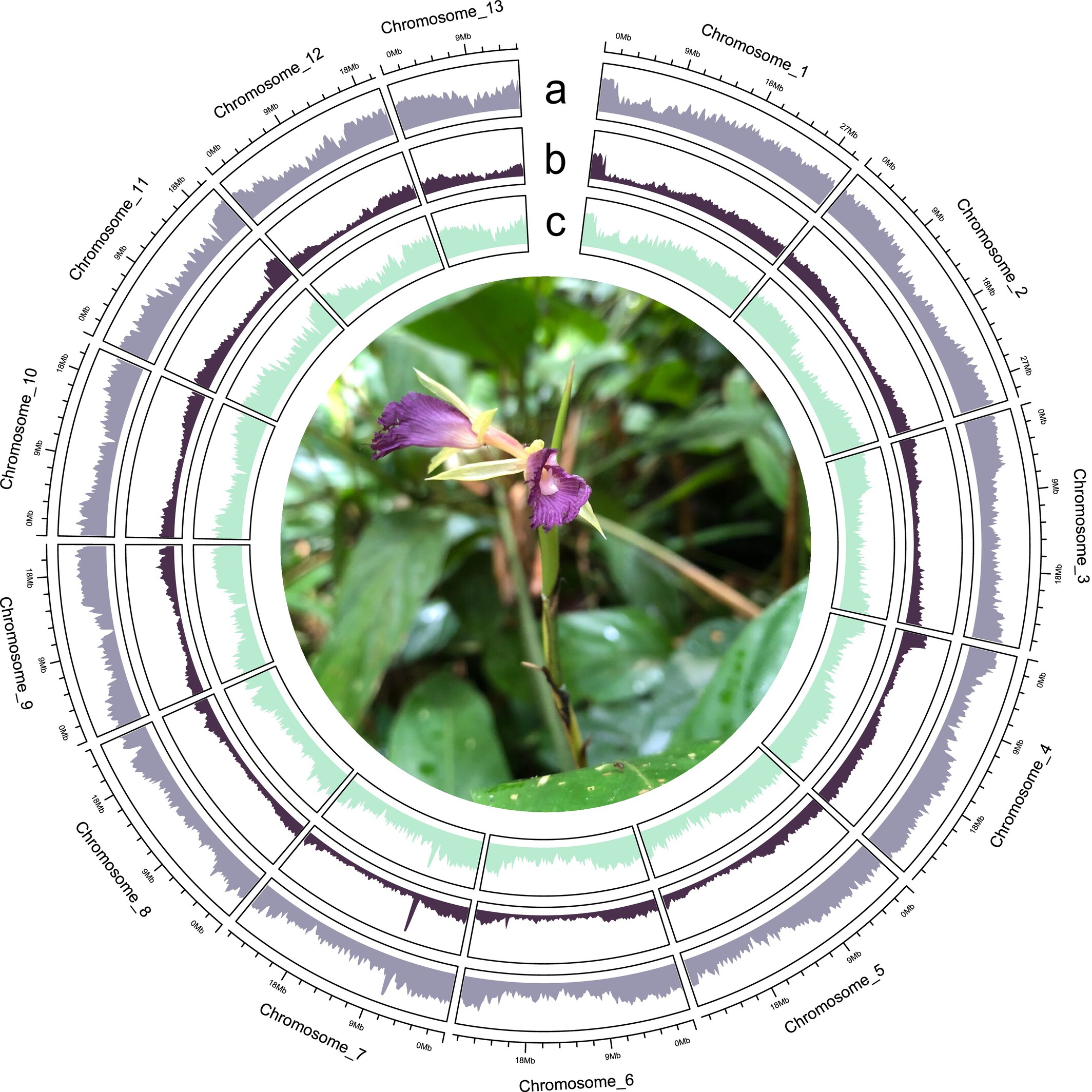
Ecological transcriptomics reveals stress response pathways of a ground-herb species in a waterlogging gradient of Amazonian riparian forests
Environmental stress is a fundamental facet of life and a significant driver of natural selection in the wild. Gene expression diversity may facilitate adaptation to environmental changes, without necessary [...]
Corresponding author:
Rafael Vasconcelos Ribeiro
Ecological transcriptomics reveals stress response pathways of a ground-herb species in a waterlogging gradient of Amazonian riparian forests
Environmental stress is a fundamental facet of life and a significant driver of natural selection in the wild. Gene expression diversity may facilitate adaptation to environmental changes, without necessary genetic change, but its role in adaptive divergence remains largely understudied in Neotropical systems. In Amazonian riparian forests, species distribution is predominantly influenced by species' waterlogging tolerance. The flooding gradient delineates distinct wetland forest types, shaping habitats and species characteristics. Here we investigated the molecular basis of environmental stress response in a tropical ground-herb species (Ischnosiphon puberulus) to environmental variation in Amazonian riparian forests. We compared environmental variables and gene expression profiles from individuals collected in two forest types: Igapó and Terra firme in the Amazonian riparian forests. Predictable seasonal flooding poses a significant challenge in Igapó compared to Terra firme environments, with the former presenting higher water column height and longer flooding duration. Our findings suggest that contrasting environmental conditions related to flooding regimes are important drivers of population genetic differentiation and differential gene expression in I. puberulus. Enriched gene ontology terms highlight associations with environmental stresses, such as defence response, water transport, phosphorylation, root development, response to auxin, salicylic acid and oxidative stress. By uncovering key environmental stress response pathways conserved across populations, I. puberulus offers novel genetic insights into the molecular basis of plant reactions to environmental constraints found in flooded areas of this highly biodiverse neotropical ecosystem.
Clarisse Palma-Silva, Amanda F. Mortati, Cleber J. Neves Chaves, Bárbara Simões S. Leal, Rafael V. Ribeiro, Fabio Pinheiro, Milene Ferro, Diego M. Riaño-Pachón, Jacqueline S. de Mattos, Marília M. Tavares, Paulo Aecyo, Tami da C. Cacossi, Jochen Schöngart, Maria Teresa F. Piedade & Thiago André

Rootstocks affect the vulnerability to embolism and pit membrane thickness in Citrus scions
Embolism resistance of xylem tissue varies among species and is an important trait related to drought resistance, with anatomical attributes like pit membrane thickness playing an important role in avoiding [...]
Corresponding author:
Gabriel Silva Pires
Rootstocks affect the vulnerability to embolism and pit membrane thickness in Citrus scions
Embolism resistance of xylem tissue varies among species and is an important trait related to drought resistance, with anatomical attributes like pit membrane thickness playing an important role in avoiding embolism spread. Grafted Citrus trees are commonly grown in orchards, with the rootstock being able to affect the drought resistance of the whole plant. Here, we evaluated how rootstocks affect the vulnerability to embolism resistance of the scion using several rootstock/scion combinations. Scions of ‘Tahiti’ acid lime, ‘Hamlin’, ‘Pera’ and ‘Valencia’ oranges grafted on a ‘Rangpur’ lime rootstock exhibit similar vulnerability to embolism. In field-grown trees, measurements of leaf water potential did not suggest significant embolism formation during the dry season, while stomata of Citrus trees presented an isohydric response to declining water availability. When ‘Valencia’ orange scions were grafted on ‘Rangpur’ lime, ‘IAC 1710’ citrandarin, ‘Sunki Tropical’ mandarin or ‘Swingle’ citrumelo rootstocks, variation in intervessel pit membrane thickness of the scion was found. The ‘Rangpur’ lime rootstock, which is known for its drought resistance, induced thicker pit membranes in the scion, resulting in higher embolism resistance than the other rootstocks. Similarly, the rootstock ‘IAC 1710’ citrandarin generated increased embolism resistance of the scion, which is highly relevant for citriculture.
Marcela T. Miranda, Gabriel S. Pires, Luciano Pereira, Rodrigo F. de Lima, Simone F. da Silva, Juliana L. S. Mayer, Fernando A. Azevedo, Eduardo C. Machado, Steven Jansen & Rafael V. Ribeiro

Physiological and biochemical processes underlying the differential sucrose yield and biomass production in sugarcane varieties
Sucrose yield in sugarcane is a complex process regulated by both environmental and endogenous factors. However, the metabolic balance driving vegetative growth and sucrose accumulation remains poorly understood. [...]
Corresponding author:
Tamires da Silva Martins
Physiological and biochemical processes underlying the differential sucrose yield and biomass production in sugarcane varieties
Sucrose yield in sugarcane is a complex process regulated by both environmental and endogenous factors. However, the metabolic balance driving vegetative growth and sucrose accumulation remains poorly understood. Herein, we carried out a comprehensive assessment of carbohydrate dynamics throughout the crop cycle in two sugarcane varieties varying in biomass production, evaluating the carbon metabolism in both leaves and stalks. Our data revealed that the decline in photosynthetic rates during sugarcane maturation is associated not only to accumulation of sugars in leaves but also due to stomatal and non-stomatal limitations. We found that metabolic processes in leaves and stalks were intrinsically linked. While IACSP94-2094 had higher stalk sucrose concentration than IACSP95-5000, this latter produced more biomass. Compared to IACSP95-5000, IACSP94-2094 showed higher sucrose phosphate synthase (SPS) activity in leaves and stalks, along with lower soluble acid invertase (SAI) activity in leaves during the maximum growth stage. Interestingly, IACSP94-2094 also exhibited higher stalk SPS activity and lower stalk SAI activity than IACSP95-5000 during maturation. High biomass production by IACSP95-5000 was associated with higher sucrose synthase (SuSy) and SAI activity in leaves and higher SuSy and soluble neutral invertase (SNI) activity in stalks when compared to IACSP94-2094 during the maximum growth. Despite the contrasting strategies, both varieties displayed similar total sucrose yield, a balance between sucrose concentration and biomass production. This phenomenon implies the presence of a compensatory mechanism in sugarcane, with high biomass production compensating low sucrose accumulation and vice versa.
Tamires da S. Martins, José R. Magalhães Filho, Larissa P. Cruz, Daniela F. S. P. Machado, Norma M. Erismann, Rose M. A. Gondim-Tomaz, Paulo E. R. Marchiori, André L. B. O. Silva, Eduardo C. Machado & Rafael V. Ribeiro

Drought responses in Coffea arabica as affected by genotype and phenophase. I – leaf distribution and branching
In Coffea arabica, there is a small genetic distance between wild and bred genotypes. However, coffee genotypes express differential acclimation to multiple drought cycles, allowing them to successfully [...]
Corresponding author:
Miroslava Rakocevic
Drought responses in Coffea arabica as affected by genotype and phenophase. I – leaf distribution and branching
In Coffea arabica, there is a small genetic distance between wild and bred genotypes. However, coffee genotypes express differential acclimation to multiple drought cycles, allowing them to successfully deal with water-limiting conditions. We hypothesized that bred coffee cultivars have a plant structure less sensitive to drought than wild genotypes. Plant and leaf architecture were analyzed over the coffee strata of two cultivars (Iapar 59 and Catuaí 99) and two wild Ethiopia accessions (‘E083’ and ‘E027’) grown under rainfed conditions and irrigation. During two consecutive productive years, evaluations were taken at leaf and berry expansion (BE1 and BE2) and harvest (BH1 and BH2) phenophases. The plant canopy was divided into up to four strata of 40 cm of thickness. Topological and geometric coding of coffee trees was performed in three botanical scales – metamers, branches, and plants in multiscale tree graphs (MTGs), following the VPlants modeling platform. Leaf and branch area per plant increased with tree structure development, being always significantly higher in irrigated than in rainfed plants over all phenophases. The individual leaf area was the least sensitive to water regime in Catuaí 99, while the 2nd order axis elevation – angle in relation to horizontal plane, ranging from 0° to 90° – of bred cultivars was less sensitive to drought than in ‘E083’. This finding partially corroborated our hypothesis that orchestrated reprograming of leaf/branch responses over the vertical plant profile were less sensitive to water availability in cultivars than in wild accessions. Leaves of 2nd to 4th-order branching were roughly plagiophile, while the 1st-order leaves were classified as extremophiles. When the coffee leaves were planophile, irrespective of genotype, this pattern was found at the lowest, 1st plant stratum, and the newest developed 4th stratum. Such responses were not obligatorily related to water regime, similar to branch elevation – with exception of ‘E083’, very sensitive to drought. Taken together, our data suggest that the leaf and branch elevations in C. arabica were more influenced by light distribution through the canopy profile – i.e., self-shading – than by water availability.
Miroslava Rakocevic, Fabio T. Matsunaga, Ricardo A. A. Pazianotto, José C. Ramalho, Evelyne Costes & Rafael V. Ribeiro

The first large-scale indoor tropical garden with Brazilian native tree species: Challenges and lessons
This commentary reports the challenges faced and lessons learned during the formation of the first large-scale tropical garden inside a building with native tree species in Brazil. This garden, set entirely [...]
Corresponding author:
Rafael Vasconcelos Ribeiro
The first large-scale indoor tropical garden with Brazilian native tree species: Challenges and lessons
This commentary reports the challenges faced and lessons learned during the formation of the first large-scale tropical garden inside a building with native tree species in Brazil. This garden, set entirely over cement slab, is inside the Albert Einstein Education and Research Center (AEERC) – Campus Cecília and Abram Szajman in São Paulo city, and comprises 11 tree species, ten of which are native to the Atlantic Forest. The indoor environment, in the shape of an atrium, is controlled and isolated from the external environment, which imposes a unique and new habitat for those tree species, especially considering that this garden is shared with people during their daily activities. Over one year, we followed the growth and development of 95 trees and noticed that the acclimation potential varied among species as well as the susceptibility to pest and disease outbreaks and low temperature (due to an imbalance in the air conditioning system), which were identified as the main limiting factors. Among the species monitored, Lafoensia glyptocarpa was the most sensitive to mites, aphids and mealybugs, and effective and rapid phytosanitary management was crucial for maintaining a healthy garden. Aspidosperma polyneuron, Eriotheca candolleana, Holocalyx balansae, Poecilanthe parviflora and Euterpe edulis were the species with the most acclimation potential to the new environment, which was based on leaf area development. On the other hand, poor acclimation was observed for Calycophyllum spruceanum, which was replaced two years after the initial planting. As an important lesson, continuous monitoring of both plants and the environment is needed to enhance our knowledge and management of indoor tropical gardens.
Rafael V. Ribeiro, Nathalia Fonseca, Manoel D. L. Neto, Isabel Duprat & Maria A. Delbin

Stress memory in crops: what we have learned so far
Abiotic stresses are among the primary environmental variables that have consistently posed challenges to agricultural production worldwide. In the last decades, our understanding of how plants sense [...]
Corresponding author:
Maria Dolores Pissolato
Stress memory in crops: what we have learned so far
Abiotic stresses are among the primary environmental variables that have consistently posed challenges to agricultural production worldwide. In the last decades, our understanding of how plants sense environmental cues has greatly expanded. This encompasses the mechanisms that convert environmental stress signals into cellular signaling pathways and gene transcription networks. Moreover, emerging evidence indicates that plants have the capacity to retain memories of past stressful experiences and use such capacity to enhance their responses under recurrent stresses. Priming, through prior exposure to a triggering factor, improves plant tolerance to subsequent biotic or abiotic stresses and has been proposed as the basis for plant stress memory. Priming-induced stress memory can persist in the current generation or even in the progeny. The significance of stress memory in enhancing abiotic stress tolerance is well-established in several important crops, and the capacity of plants to retain stress-related memories has been linked to diverse plant mechanisms. In this review, we revisit the recent literature reporting the mechanistic underpinnings of abiotic stress memory in important crops. We outline the underlying processes related to acquisition of stress memory, occurring at molecular, physiological, biochemical, and morphological levels. Here, we addressed the methods for studying plant memory over the last ten years, giving special attention to growth conditions, phenological stages and the techniques for inducing crop memory. Enhancing our comprehension of stress memory-related mechanisms would open up a range of possibilities for developing stress-resistant genotypes through molecular breeding or biotechnological methods or even stress-resistant crop fields due to improved management practices.
Maria D. Pissolato, Tamires S. Martins, Yutcelia C. G. Fajardo, Gustavo M. Souza, Eduardo C. Machado & Rafael V. Ribeiro

Bromeliad populations perform distinct ecological strategies across a tropical elevation gradient.
The effect of environmental gradients on the remarkable diversity of mountain-associated plants and on the species' abilities to cope with climate change transcends species-specific strategies. For instance, [...]
Corresponding author:
Rafael Vasconcelos Ribeiro
Bromeliad populations perform distinct ecological strategies across a tropical elevation gradient.
The effect of environmental gradients on the remarkable diversity of mountain-associated plants and on the species' abilities to cope with climate change transcends species-specific strategies. For instance, our understanding of the impact of thermal gradients on ecological divergences in populations of widely distributed species is limited, although it could provide important insights regarding species' response to climate change. Here, we investigated whether populations of an endemic species broadly distributed across an elevation gradient employ unique or multiple divergent ecological strategies according to specific environmental conditions. We hypothesised that populations employ distinct strategies, producing a tolerance-avoidance trade-off related to the thermal conditions they experience across elevations. We conducted our research with 125 individuals of Pitcairnia flammea (Bromeliaceae) sampled from various elevations spanning from sea level to ~2200 m and cultivated under the same conditions. To assess specific ecological strategies of P. flammea populations across elevations, we examined leaf temperature, heat and cold tolerances, as well as other structural/morphological, optical, physiological and biochemical leaf traits. We majorly observed that water-saving traits diminish as elevation increases while membrane fluidity, majorly associated with unsaturated and very-long-chain lipids, enhances. Low-elevation individuals of P. flammea invest in water storage tissues, which likely prevent excessive water loss through the intense transpiration rates under warming periods. Conversely, high-elevation plants exhibit increased membrane fluidity, a possible response to the stiffening induced by low temperature. Our results revealed a tolerance-avoidance trade-off related to thermal strategies of populations distributed across an elevation gradient. Low-elevation plants avoid excessive leaf temperature by investing in water-saving traits to maintain transpiration rates. High-elevation individuals, in turn, tend to invest in membrane properties to tolerate thermal variations, particularly cold events. Our findings challenge the conventional notion that plants' vulnerability to warming depends on species-specific thermal tolerance by showing diverse thermal strategies on populations across an elevation gradient.
Cleber J. N. Chaves, Tami C. Cacossi, Taynara S. Matos, João P. S. P. Bento, Lucas N. Gonçalves, Simone F. Silva, Marcus V. da Silva- Ferreira, Douglas F. Barbin, Juliana L. S. Mayer, Alessandra Sussulini, Rafael V. Ribeiro & Clarisse Palma- Silva